Wednesday, February 14, 2007

Turkish Government Lobbies U.S. Congress


Turkish Officials in Washington Gather Forces to Block Genocide Resolution
Turkey’s Foreign Minister, MPs, and Armed Forces Chief are Arriving This Week and Next
By Emil Sanamyan (Special to the Armenian Reporter)

WASHINGTON, DC – Following the introduction of a draft congressional resolution on the Armenian Genocide on January 31, 2007, senior Turkish officials launched a series of visits to Washington to tout Turkey’s importance, while warning that U.S.-Turkish cooperation would be “harmed” if a resolution affirming the U.S. record on the Genocide is adopted.

Turkey’s Foreign Minister Abdullah Gul confirmed that the Genocide resolution, along with Turkey’s concerns over Iraq, has dominated his agenda in Washington. Turkey is seeking to prevent a vote on House Resolution 106 (H. Res. 106), which has already won support from about 170 House members.

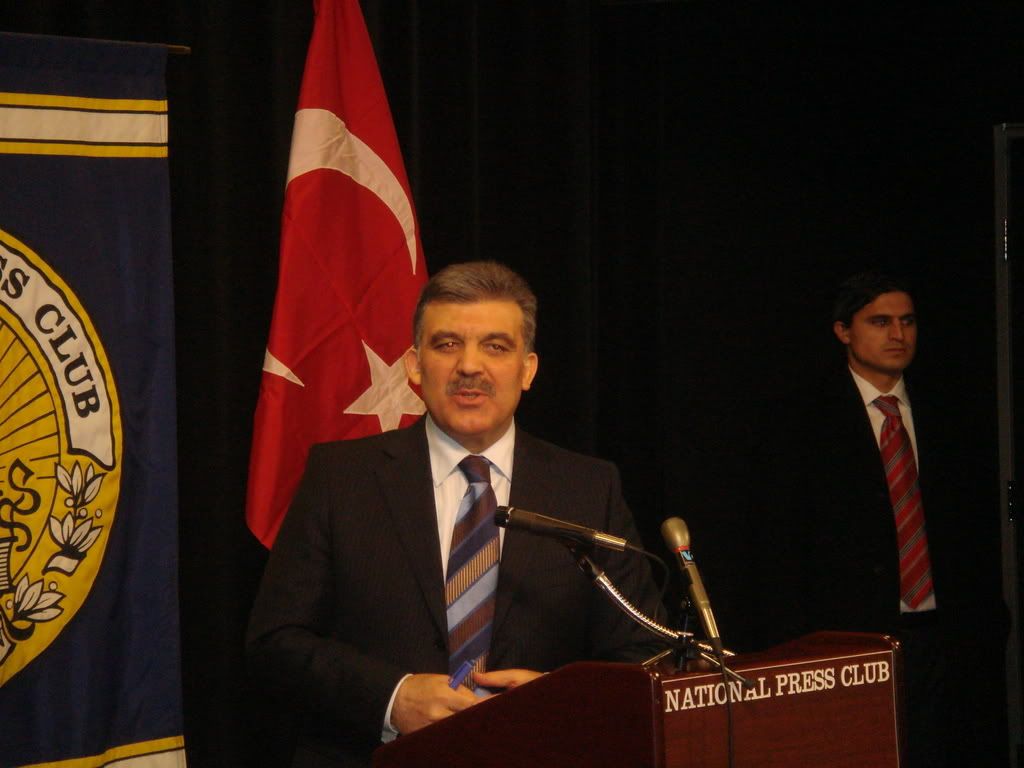
Speaking at Washington’s National Press Club on Tuesday, Gul argued that Turkey is of such importance to the United States that America should not risk aggravating its relations by affirming the Armenian Genocide.

Asked by the Armenian Reporter why Turkey’s warnings should be taken seriously, if its relations have survived similar resolutions adopted by over a dozen other countries, Gul hinted that the U.S. is more vulnerable to Turkey than Canada or European countries that have recognized the Genocide. He specifically pointed to Iraq and Afghanistan as areas where the U.S. needs Turkey’s support.

Bush Administration Opposes the Resolution

On February 5 and 6, Gul met with Vice President Dick Cheney, President Bush’s National Security Advisor Stephen Hadley and Secretary of State Condoleezza Rice. Administration officials have pledged to work against the resolution.

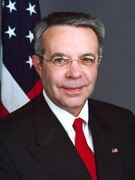
According to sources close to Congress at least one House member received a telephone call from Undersecretary of Defense Eric Edelman. A former U.S. Ambassador to Turkey, Edelman resigned his position in 2005 after repeated anti-Semitic comments made against him in the Turkish media. He was reportedly calling to oppose the resolution.

“We are working harder than usual [to prevent the vote],” Deputy Assistant Secretary of State Matt Bryza was quoted as saying by the Associated Press. Echoing comments made by Turkish officials on the issue, Bryza argued that “a congressional resolution would be a tremendous blow to our bilateral relationship.”

A State Department transcript of the February 1 meeting with Turkish journalists cited Bryza as referring to the Armenian Genocide as “so-called.” But speaking with the RFE/RL Armenian Service on February 7, Bryza said that the Administration “do[es] not deny the mass killings and forced exile of up to 1.5 million Armenians.”

Dan Fried, Assistant Secretary of State and Bryza’s manager at the Department, told the Turkish Daily News that while the Administration will oppose the resolution, “If a resolution does pass … I hope that our Turkish friends will understand that it’s not the position of the U.S. administration, and our interests, Turkey’s interests and America’s interests, will still bring us together.”

Fried also added, in reference to the Genocide, that “Honest countries, free countries need to seriously look at these dark spots [of history], and no matter how painful it is, they need to confront them.”

Turkey Lobbying U.S. Congress, Seeks Jewish Support

On February 7, Gul was due to meet Democratic Majority leader Steny Hoyer (D-MD), Foreign Affairs Committee Chairman Tom Lantos (D-CA) and other key congressmen.

Turkish media reported that the House Speaker Nancy Pelosi declined to meet Gul. It is up to the House Speaker whether a vote on the resolution takes place, and Pelosi, a long-time supporter of affirmation, has previously expressed support for the resolution.

Turkish and Azerbaijani reports suggested that the Turkish Foreign Minister will be specifically lobbying Congressmen John Murtha (D-PA) and Rahm Emanuel (D-IL) to weigh in with Speaker Pelosi.

The Azerbaijani Press Agency (APA) further claimed that Turkey was supported by “three” Jewish American organizations. It cited an unnamed leader of one of the Jewish organizations as telling Turkish journalists that “[Congressman] Emanuel should be persuaded of the importance of preventing the bill. [Speaker] Nancy [Pelosi] always follows Emanuel’s advice.”

The Jewish Telegraph Agency (JTA) reported that on Monday night Gul met with representatives from a number of Jewish American organizations and asked them for assistance in opposition to the Armenian Genocide resolution. JTA did not say if any such assistance was promised.

Reached by the Armenian Reporter, the American-Israeli Public Affairs Committee (AIPAC) spokeswoman Jennifer Cannata said that the organization had no formal comment on the Genocide resolution. The American Jewish Committee (AJC), whose representatives that took part in the meeting with Gul, could not provide comment at press time.

Starting this week, about a dozen Turkish parliamentarians will follow Gul to lobby the U.S. Congress and the public against the Genocide resolution.

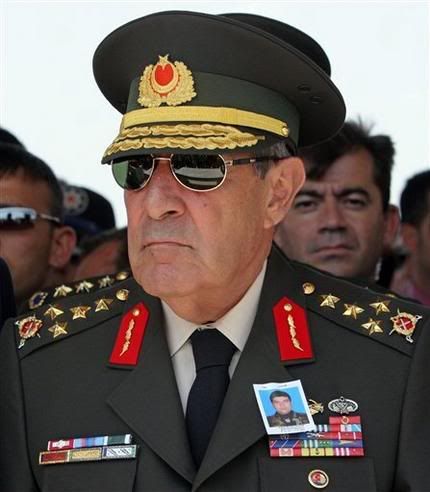
Next week, Chief of Staff of the Turkish Armed Forces Gen. Yasar Buyukanit will arrive to try to mend the bilateral military relations severely damaged as a result of the Iraq war.

(Published in the Armenian Reporter, February 10, 2007)

Armenia and Georgia - part 2


Georgia – Between Azerbaijan and Turkey: What Can Armenia Offer? (Part 2 of 2)
By Emil Sanamyan (Special to the Armenian Reporter)

WASHINGTON, DC – Following Georgia’s decision in late December to buy Russian gas at $235 per thousand cubic meters (tcm), twice the price Georgia paid last year, local media and pundits discussed the possibility of increasing the tariff on Russian gas supplies to Armenia.

In other words, Georgia would look to Armenia to subsidize, at least in part, the Russian price hike. Armenia will be paying $110/tcm of Russian gas through the end of 2008. In exchange Russia increased its control over Armenia’s gas transportation infrastructure.

Cory Welt, the deputy director for Eurasia at the Washington-based Center for Strategic and International Studies (CSIS), who watches Georgian politics closely, told the Armenian Reporter in December that he “doesn’t see how Georgians would allow the $110 gas to go to Armenia, while they are paying $235…. This will pose a large problem for Armenia.”

Earlier this month, political commentator Soso Tsintsadze told the Georgian newspaper Sakartvelos Respublika that such a move was being considered by the Georgian government. Currently, Georgia receives 100,000 tcm as a tariff for Russian gas supplies to Armenia (equivalent to $23.5 million at the new price.)

But chairman of the Georgian Parliament’s committee on economic policy Niko Lekishvili ruled out such a step, reported Georgia’s Messenger daily on January 8. Lekishvili said that Georgia does not want to hurt its relations with Armenia.

Higher tariffs for Armenia are just some and perhaps not the worst of the potential consequences of the Russian price hike against Georgia.

The Georgia-Turkey-Azerbaijan Connection

Enter Azerbaijan and Turkey, which have offered Georgia gas supplies at significantly lower prices than Russia is now asking. If Russia conditions lower prices for its gas supplies to control of the countries’ strategic assets and Russia-friendly policies, should not Azerbaijan and Turkey be expected to do the same?

CSIS’ Welt called the recent preliminary agreements between Azerbaijan, Georgia and Turkey on gas supplies a “step towards consolidation of the Georgian-Azerbaijani partnership … leaving Armenia on the other side.”

Since questions remain on how much gas Azerbaijan can in fact produce for itself and for export, Georgia is both driving a hard bargain on Azerbaijan-initiated projects and biding its time. But the partnership is already beginning to bear fruit for Azerbaijan.

On January 13, transport officials from Azerbaijan, Georgia and Turkey met in Tbilisi and agreed to go ahead with construction of the Tbilisi-Akhalkalaki-Kars railroad that Azerbaijan initiated to, as the Azeri president put it, make Armenia’s future “even bleaker.”

As part of the deal, Azerbaijan agreed to provide a virtually interest-free (1 percent APR for 25 years) $220 million loan to Georgia for the rehabilitation and construction of the Georgian stretch of the railroad. (Georgia’s Minister of Economic Development Georgi Arveladze, however, put the estimate for the Georgia section at $300 million.)

The construction of the 160-mile line is expected to begin by September of this year and to be completed by 2010, with an estimated total cost of $600 million.

On February 7, Azerbaijani President Ilham Aliyev and Turkey’s Prime Minister Recep Tayyib Erdogan were in the Georgian capital for the inauguration of its airport’s new terminal. The terminal is constructed by a Turkish company that has 15-year management rights for the airport in Tbilisi, as well as the one in Batumi, in Georgia’s Black Sea province of Ajaria.

Azerbaijani officials have previously expressed interest in buying up key infrastructure in Georgia’s Black Sea ports of Poti and Batumi, both heavily relied upon by Armenia.

These are just some examples of Turkish and Azerbaijani real and potential economic expansion into Georgia, which will have consequences for Armenia.

In addition to economics, there is the on-again, off-again issue of the resettlement of Meskhetian Turks displaced from Central Asia into the Armenian-populated Javakhk region, and the frequent discrimination faced by ethnic Armenian citizens of Georgia.

In several official statements in recent months, Georgia has explicitly endorsed Azerbaijan’s claims on Karabakh, and the two countries cooperated on having this view endorsed at the United Nations’ General Assembly.

There is also military cooperation between Georgia and Turkey and, to a lesser extent, Azerbaijan. Turkey has paid for the renovation of Georgia’s main airforce base outside the ethnically Azeri-populated town of Marneuli, along with some of Georgia’s other military programs. Georgia has in turn sold fighter jets to Azerbaijan.

Opportunities for Armenia

What opportunities does Armenia have for positive engagement with Georgia to deter future problems?

“Changes in gas supply patterns are a short-term issue,” says Arthur Martirosyan, Program Manager at the Cambridge, Massachusetts-based Civil Society and Conflict Management Group of the Mercy Corps.

“Long-term, both Armenia and Georgia are pursuing European integration and this process creates important leverages for Armenia; both countries are also members of the World Trade Organization (WTO).”

“For now, Georgia is not taking any practical anti-Armenian steps,” Martirosyan notes. “But Armenia could potentially engage WTO, European or even American venues to moderate any such steps that Georgia may be pushed to undertake.”

More locally, while Russia appears to have taken control of future Iranian gas supplies to Armenia, there must be a way for Armenia to be able to offer Georgia an alternative source of gas that would come through Armenia rather than from or through Azerbaijan.

There is certainly a need for a stronger Armenian economic presence in Georgia. This means Armenian – including diaspora Armenian – investments in Georgia. So far, the Cascade Bank and Grand Tobacco are the only Armenian companies known to have invested in Georgia. (Disclosure: Cascade Bank belongs to the Cafesjian Family Foundation, which also owns this newspaper.)

Targeted economic investments in Tbilisi, Javakhk, and the Black Sea ports would also mean strengthening the Armenian community in Georgia, giving them the confidence to stay in Georgia and have their voices heard in national politics.

“A democratic Georgia that shares European values provides an important opportunity for a long-term alliance with Armenia,” says Martirosyan. “But such an alliance would require consistent and-thought out engagement on the part of Armenia.”

(Published in the Armenian Reporter, February 10, 2007)

Saturday, February 3, 2007

U.S. Congress on Armenian Genocide


Congressmen Introduce Resolution Affirming U.S. Record on Genocide
Amid General Optimism for Passage a Tough Fight is Likely
By Emil Sanamyan (Special to the Armenian Reporter)

WASHINGTON, DC – Lawmakers have launched a new effort to have the U.S. Congress affirm the Armenian Genocide. The proposed House Resolution 106 (H. Res. 106), “Calling upon the President to ensure that the foreign policy of the United States reflects... the United States record relating to the Armenian Genocide,” was officially entered into the Congressional Record on January 31, 2007.

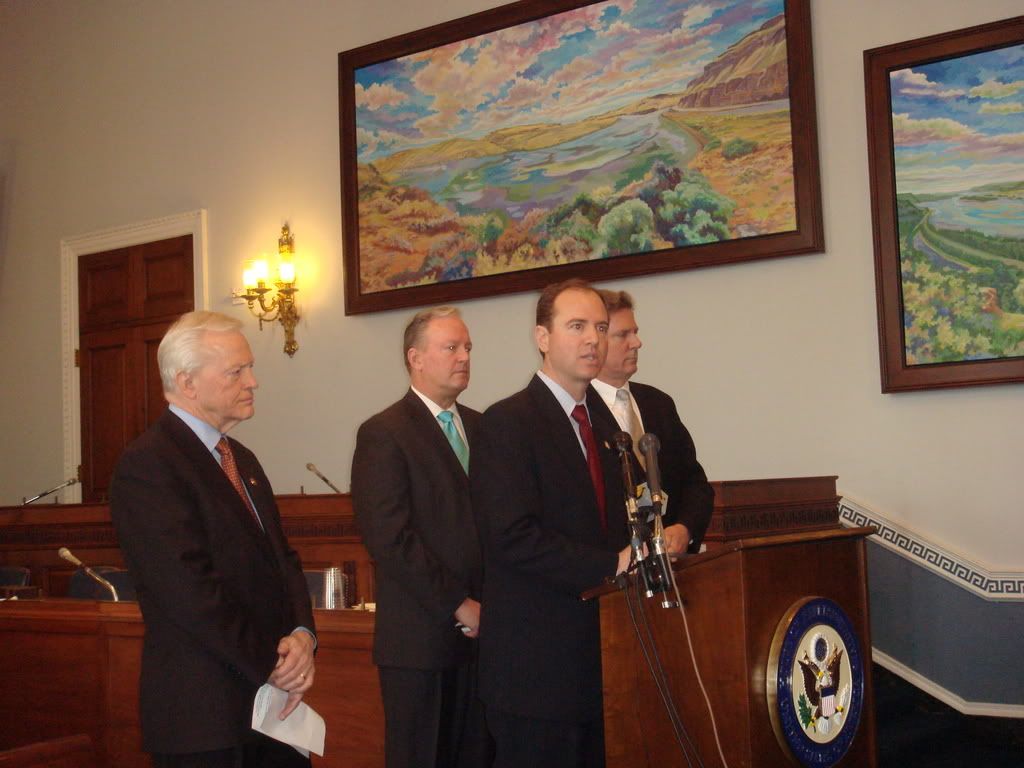
The House measure is championed by Congressmen Adam Schiff (D-CA), Frank Pallone, Jr. (D-NJ), George Radanovich (R-CA), and Joe Knollenberg (R-MI), who announced the effort at a January 30 press conference.

As in the past, the Bush Administration is expected to oppose the resolution, which both its supporters and opponents agree has its best chance of passage in years.

H. Res. 106 has received an early endorsement from over 160 congressmen of the 435-member House of Representatives. These early co-signers comprise more than half of the Democratic majority and over one-fifth of the Republican minority in the House.

The Democrats’ victory last November has led to the election of Congresswoman Nancy Pelosi (D-CA) as the House Speaker, the first time a member of the Congressional Armenian Caucus and long-time supporter of Genocide affirmation has been chosen for the position.

“We feel very strongly that this year is the year we’re going to get [the resolution] passed,” Rep. Pallone said at the press conference.

Asked by the Reporter how soon the passage is expected, Rep. Knollenberg suggested that the resolution would come up in the “next 90 days,” around the time of April 24 commemoration.

But before it can be considered by the full House, H. Res. 106 will be taken up by the House Foreign Affairs Committee, whose members and legislation’s two other original co-sponsors Congressmen Brad Sherman (D-CA) and Thaddeus McCotter (R-MI) will play an important role in securing a prompt Committee consideration.

Twenty-one of the 48 Committee members are among the early co-signers of the resolution. The Committee is chaired by Congressman Tom Lantos (D-CA), who has a mixed record on affirmation.

A Holocaust survivor, Rep. Lantos nevertheless opposed similar affirmation measures in the past, citing Turkey’s importance to the United States. But in 2005, the last time a resolution on the Armenian Genocide received Committee consideration, Rep. Lantos voted for affirmation, citing Turkey’s obstructionism of U.S. policies. In January, Rep. Lantos co-signed a congressional letter to the Turkish government condemning the assassination of Hrant Dink and urging reform in Turkey.

Should the legislation clear the Committee, as similar measures have in the past, it will be up to the Speaker to bring the resolution to the House floor, something that Pelosi’s predecessors repeatedly refused to do, citing opposition from both the Bush and Clinton administrations.

The resolution’s original co-sponsors cautioned that passage would not be easy. “Make no mistake, the speaker will get a call from the president asking for [a vote not be scheduled] on the grounds of national security,” said Rep. Radanovich.

U.S. Ambassador to Turkey Ross Wilson has already expressed the Administration’s opposition to the resolution. And the Turkish government is likely to use its paid lobbyists in Washington in combination with blackmail tactics, such as threatening trade embargoes and suspending military cooperation, to provide a rationale for the Administration’s opposition.

Turkey may also take steps to tighten its blockade against Armenia, as it did in 2000, when a Genocide resolution was pulled from congressional consideration at the last moment.

But even the resolution’s opponents have acknowledged that it has good chances of passage. U.S. Undersecretary of State Nicholas Burns agreed that there is a “lot of momentum behind” the effort to pass the resolution.

Burns made the comment while answering a question from one of Turkey’s leading journalists, Mehmet Ali Birand, who suggested that “there is an overall belief that the Bush Administration will not be able to block” the resolution.

This view was also shared by Turkey’s former President (1993-2000) Suleyman Demirel, who was quoted on January 23 by the Azeri daily Zerkalo as saying that, “this time around this legislation is expected to be adopted.”

During his visit to Turkey in January, Burns was repeatedly asked by major local media whether the murder of Hrant Dink would affect the chances for the resolution’s passage. While Burns dismissed such linkages as “inappropriate,” it appears that while strongly condemning the assassination the Turkish establishment also had in mind the imminent introduction of the resolution.

Former U.S. Ambassador to Turkey Mark Parris (1997-2000) was quoted by the Turkish Daily News as saying that “the resolution is likely to pass in both the House of Representatives and the Senate” in spite of Administration’s opposition.

At this week’s press conference, the resolution’s co-sponsors argued that the opponents of affirmation were misguided, and that passage is in best interest of both U.S. and Turkey.

Rep. Schiff asked: “How can we demonstrate the kind of moral leadership we need to condemn the genocide in Darfur, if we do not have the courage to recognize the murder of a million and a-half people in the first genocide of the last century?”

(Published in February 3, 2007 Armenian Reporter)

Murder of Hrant Dink


Erdogan and Turkish Media Point to “Deep State” Following Dink’s Murder
But Turkey’s Government is in No Rush to Liberalize Laws in an Election Year
By Emil Sanamyan (Special to the Armenian Reporter)

WASHINGTON, DC – Turkish Prime Minister Erdogan acknowledged that Turkey has not done enough to crack down on what is known as a “deep state” – a reference to an ultra-nationalist mafia encompassing elements of Turkey’s government bureaucracy, security forces, and criminal world – believed to be behind much of the past violence in the country.

But as xenophobic outbursts followed the outpouring of sympathy over Hrant Dink’s murder, and in an apparent nod to nationalists, Turkish officials said they were not ready to repeal provisions that criminalize “insulting Turkishness” and that had led to the targeting of Dink and other dissidents.

Investigation Points to Conspiracy

It has also emerged that Turkish police were aware of an ultra-nationalists’ plot to kill Hrant Dink, but apparently took no action.

The daily Sabah produced a letter sent to police intelligence headquarters in Ankara and to the Istanbul police in February of 2006, which cited a police informant, Erhan Tuncel, reporting that “Yasin Hayal will shoot Hrant Dink.”

Both Hayal and Tuncel are under arrest as part of the police investigation into Dink’s murder. Hayal has confessed that he supplied the suspected teenage assassin Ogun Samast with money and the weapon used in the murder.

Turkish newspapers had previously described Tuncel as directing Hayal and reported that he was charged with “instigating the killing.” Sabah published a photo linking Tuncel to Muhsin Yazicioglu and his ultra-nationalist Grand Unity Party (BBP). Yazicioglu has denied any role in the murder.

Tuncel, however, is unlikely to have been both the main organizer and an informant who told police about the conspiracy to kill Dink. And senior Turkish officials appear to share the public perception of a larger conspiracy that led to the assassination.

The Turkish Daily News cited Deputy Prime Minister Mehmet Ali Sahin, who represented the government at Dink’s funeral, as telling Samanyolu TV that police needed to find the real organizers of the murder. “Those arrested boys are straw men to me,” Sahin said.

The Turkish government also dismissed Trabzon’s governor and police chief. Police officials would not comment on Sabah’s allegations. Hayal, Tuncel and Samast are residents of Trabzon, in Turkey’s northeast, where another teenager murdered a Catholic priest in February of last year.

Azerbaijan Connection

The Turkish news portal Haber3.com and the Radikal newspaper cited Orhan Dink as saying that his brother was particularly worried about threats from retired General Veli Kucuk, since the latter was previously with the controversial “Intelligence and Counter-Terror Unit” (JITEM) of the Turkish Gendarmerie (internal security forces).

For over a decade, JITEM was in many ways a modern-day iteration of Teskilat-i Mahsusa (Special Organization) that carried out Armenian massacres on behalf of the Ottoman government. JITEM was linked to death squads that targeted Kurdish resistance in Turkey and their perceived political allies inside and outside the country.

The Kurdish Firat news agency published pictures of an Azerbaijani nationalists’ get-together in Sweden in 2005, where Kucuk was seen with other Turkish ultra-nationalists, such as Kamal Kerincsiz who repeatedly filed legal claims against Dink and other Turkish dissidents. Both Kerincsiz and Kucuk denied any role in the murder.

The same news agency cites a nephew of Azerbaijan’s former Deputy Interior Minister Siyavush Mustafayev, who claimed in 2001 that Kucuk, in cooperation with Azerbaijan, established a “murder network against Armenians.” Hayal, one of the main suspects so far, was also reported to have been trained in explosives at a camp in Azerbaijan.

‘Deep State’ Backlash

As he was charged on January 24, Hayal issued a brazen public threat against writer Orhan Pamuk, who like Dink and others was prosecuted for raising the Armenian Genocide issue.

Just a day after Dink’s funeral, the Agos newspaper office received a bomb threat from the “Turkish Revenge Brigade.” The same group threatened to bomb the Turkish parliament building in Ankara unless suspects in Dink’s case are released and, according to the Paris-based Reporters Without Borders (RSF), ordered the 1998 murder of Akin Birdal, Turkey’s then leading human rights activist.

In Gelibolu, just south of Istanbul, a 36-year-old ex-soldier took passengers of a ferryboat hostage in protest of pro-Armenian sentiments broadcast following Dink’s murder. In Samsun, where the suspected assassin was arrested, a Turkish protestant church was stoned.

And at a soccer match in Trabzon, where plans to kill Dink were allegedly hatched, fans held some 3,000 banners with nationalist slogans and chanted in support of the local police chief sacked by the government following the murder.

The General Staff Chief of the politically powerful armed forces, Gen. Yasar Buyukanit, complained that foreign diplomats accredited in Turkey attended Dink’s funeral, Zaman daily reported. Buyukanit, who issued a statement condemning Dink’s murder, was reportedly unhappy in what he sees as foreign ‘indifference’ to deaths of Turkish military personnel fighting Kurdish insurgency.

No Plans to Repeal 301

Speaking on January 28, Prime Minister Recep Tayyip Erdogan said that the government will not propose to repeal Article 301 of the Turkish criminal code, Turkey’s NTV reported.

Article 301, along with other articles of the code, limit freedom of expression and have led to the repeated prosecution of Dink, Pamuk, and dozens of other Turkish intellectuals who question the government’s policy on the Armenian Genocide and other “sensitive” issues. The European Union and human rights organizations have long called for the provisions to be dropped.

Erdogan suggested that the controversial provisions could be revised and offered that Turkey’s civic groups jointly propose amendments.

The Turkish Daily News reported that the Ankara Bar Association has called for a meeting of NGO’s to discuss such proposals. The Association’s President Ozdemir Ozakman cautioned that NGO’s had failed to develop a consensus over the issue in the past. Ozakman told the newspaper that “[The government] is passing the ball …. This is the political responsibility of government. And we will send the ball back.”

And no amendments are likely any time soon, as Erdogan is expected to try to replace President Ahmet Necdet Sezer, whose term will be up in May. In November, Turkey will hold General Elections for Parliament, in which all parties are courting nationalist voters.

(First published in February 3, 2007 Armenian Reporter)

Friday, February 2, 2007

Hoagland Redux

Published in January 20, 2007 Armenian Reporter

Nominee for Armenia Ambassador Faces Another Hold in Senate
By Emil Sanamyan (Special to the Armenian Reporter)


(Sen. Menendez on the left and Amb. Hoagland on the right.)

WASHINGTON, DC – Senator Robert Menendez (D-NJ) has placed a new hold on the nomination of Richard Hoagland as U.S. Ambassador to Armenia. The full Senate will not be able to consider the candidacy unless the hold is lifted.

No imminent Senate action was pending as of January 17, 2007, however. The reason, according to a Senate Foreign Relations Committee staffer familiar with the process, is that Hoagland’s nomination has not yet been formally submitted to the Senate. According to the staffer, it normally takes some time between a White House announcement and the actual submission of a candidacy.

Hoagland was first nominated last year to replace Ambassador John Evans, who ended his term early, in September of 2006. Evans formally left the State Department late last year and has since confirmed to the Los Angeles Times that his remarks affirming the Armenian Genocide made in February 2005 caused displeasure at the State Department, resulting in his early departure.

During hearings on the nomination held last summer, Hoagland appeared to question the validity of the Genocide, but his comments were later withdrawn by the State Department. Sen. Menendez said in his January 11 statement that “given the circumstances and controversy surrounding Mr. Hoagland's nomination, I believe that the best way to move forward would be for the President to nominate a new candidate for this ambassadorship.”

Last month, Menendez and then-incoming Democratic Majority Leader Harry Reid (D-NV) wrote to Secretary of State Condoleezza Rice urging her to withdraw Hoagland and nominate another candidate. But last week, the Bush Administration said it would re-nominate Hoagland.

According to a January 11 article in The Hill newspaper, which monitors congressional developments, Hoagland is among at least eight Administration nominees, whose candidacies were held up in the Senate last year, but would be re-nominated by President Bush.

Asked about Senate concerns regarding the nomination, a State Department official told this writer that it is within the purview of the White House to nominate whomever it wishes, but it is up to the Senate to grant approval.

A spokesperson for the White House told the Armenian Reporter that “Ambassador Hoagland is a talented diplomat who possesses the expertise and experience necessary to serve in this important position. The President is encouraging the Senate to confirm Ambassador Hoagland as soon as possible.” The White House would not speculate on whether the President would appoint Amb. Hoagland during the Senate recess to side-step the confirmation process, however.

Sen. Menendez stressed in his statement that “if there is any sincerity behind the Bush administration’s rhetoric about ‘liberty on the march’ – if ‘never again’ is to be more than a bumper sticker slogan – then American diplomacy should consist of nothing less than unvarnished honesty with our friends and enemies alike. And we must call genocide by its name.”

In addition to the hold, the Hoagland nomination would have to face another vote in the Senate Foreign Relations Committee, of which Sen. Menendez is now a member. With Democrats in control, the Committee is now chaired by Sen. Joseph Biden (D-DE), a supporter of Genocide affirmation who nevertheless joined the majority in a 13 to 5 vote to advance the Hoagland candidacy to the full Senate last September.

A former Senate staff member familiar with Foreign Relations Committee procedures told this writer that the Committee chair has great discretion as to what is going to happen with the nomination next. Sen. Biden could theoretically delay the consideration indefinitely, as was the case with the failed nomination of John Bolton to be U.S. Permanent Representative to the United Nations. Alternatively, the former Senate staffer said, Sen. Biden could either proceed directly to a new vote or schedule a new hearing on the nominee.

Georgia and Gas


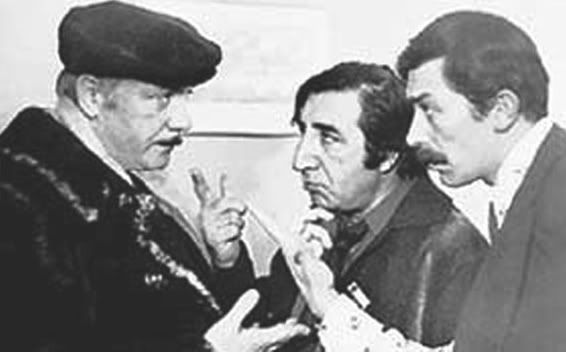
Actors from the 1977 Soviet film classic “Mimino” are etched in popular minds as symbols of Armenian-Georgian friendship in adversity. L-R: Sergei Kuravlev, Frunzik Mkrtchian, Vakhtang Kikabidze. Source: SovErkon.ru

Published in the Janury 13, 2007 issue of the Armenian Reporter.

Armenia and Georgia: Will the Delicate Embrace Survive a Gas Onslaught?
By Emil Sanamyan (Special to the Armenian Reporter)

WASHINGTON, DC – Georgia is one of only two neighboring countries which shares an open border with Armenia. It is Armenia’s main outlet to the world, with over 90 percent of Armenia’s external trade crossing Georgia’s territory either by air, overland, or making use of Georgia’s ports. Georgia is also home to a large Armenian community with deep roots in history, centered in the capital city Tbilisi and in Javakhk (Javakheti).

Few countries in the world are as important to Armenia as is Georgia.

Georgia in turn earns many tens of millions of dollars in revenue from transiting goods either destined for or originating in Armenia. Last summer, Armenian tourists helped make the province of Ajaria Georgia’s fastest-growing local economy. Georgia also needs Armenia’s help in the Armenian-populated Javakhk, and as leverage in Georgia’s bargaining with Russia, Turkey, and Azerbaijan.

Few countries in the world are as important to Georgia as is Armenia.

But current tensions between Russia and Georgia threaten to push the latter into the camp of Armenia’s adversaries. Georgia’s importance to Armenia has not been lost on Turkey and Azerbaijan, which have long used a mixture of carrots and sticks to recruit Georgia into anti-Armenian projects. Most recently, this approach has been reflected in the Turkish-Azerbaijani offer to Georgia of discounted gas supplies in exchange for expediting the Kars-Akhalkalaki railroad; it is also possible that Turkey and Azerbaijan have advanced other unpublicized initiatives against Armenian interests.

Gas Pressure

Both Armenia and Georgia are gas importers. Russia has long been the sole supplier of natural gas to both. Without local nuclear energy capacity, natural gas is even more significant to Georgia than it is to Armenia. Both countries are seeking to diversify their energy imports.

Armenia is looking to new renewable capacities, Iranian gas, and a new nuclear power plant. Georgia has likewise looked to Iran for gas supplies via Azerbaijan and Armenia, but it also has the option of direct supplies from Azerbaijan.

Georgia is under particular pressure to diversify away from Russia, since Tbilisi is banking on integration with the West as a way to regain control of the breakaway provinces of South Ossetia and Abkhazia, and provide for the country’s security and development.

Starting this month, Russia will charge Georgia $235 per thousand cubic meters (tcm) of gas, up from $110/tcm in 2006 and about $60/tcm in 2005. Armenia will continue to pay $110/tcm through 2008, having transferred control over its gas infrastructure, reportedly including the future Iran line, to Russia.

Annoyed with their former satellites’ drift westward, the Russian leadership has decided to charge the former Soviet republics the prices it charges European countries, either in cash or, as in the case with Armenia, in cash and assets.

(Along with Armenia, both the Ukraine and Moldova were able to secure lower than market prices for gas, having transferred to Russia partial or full control over their gas infrastructures; Belarus is expected to follow suit soon.)

The meteoric rise in the price for Russian gas has put an added pressure on Georgia to secure another source of natural gas. Last winter, during the suspicious interruption in Russian gas supplies to both Georgia and Armenia, Georgia turned to Iranian gas supplied via Azerbaijan. Armenia was able to ride out that crisis thanks to its gas reservoir.

But the problem with buying Iranian gas is not only that it irritates the United States. It is also expensive. Iranians demand world prices for its supplies. Or, alternatively, any discount from the Tehran government might come with political strings attached that would make such a deal politically unaffordable for a U.S.-backed Georgia.

Faust’s Bargain Falls Through (for Now)

These pressures provide Azerbaijan and Turkey with an opportunity. According to December 21 reports in the Turkish Daily News and Russia’s Kommersant newspapers, the two countries have tied their offer of energy assistance to Georgia to the latter’s support for the Kars-Akhalkalaki rail line, which would link Georgia and Turkey while bypassing Armenia. In addition, according to Kommersant, Turkish leaders also demanded that Georgia expedite the settlement of ethnic Turks displaced from Central Asia in the Armenian-populated Javakhk region.

In exchange, Georgia is seeking a firm Azeri-Turkish commitment on gas supplies as well as payment for any rail-related expenses. On December 26, following his visit to Baku, the Georgian Prime Minister Zurab Nogaideli announced that the railroad project would be finalized during a trilateral meeting in Tbilisi on January 10, and construction launched later in 2007.

Azerbaijan and Turkey view the Kars-Akhalkalaki railroad as a form of pressure on Armenia, and Azeri President Ilham Aliyev has stated this publicly. Azerbaijan is also trying to remove any economic incentives for Turkey to open the border with Armenia. Armenian officials appear to share this perception of the project, with Foreign Minister Vartan Oskanian repeatedly expressing concerns, and even offering to use the existing Kars-Gyumri-Tbilisi rail line free of charge.

The gas issue is more complicated. At this time it is unclear how much gas Azerbaijan would be able to produce in 2007. Azerbaijan would also need to rely on its own production for domestic needs in lieu of more expensive Russian and Iranian gas. As a result, Azerbaijan has so far agreed to supply Georgia with only 90 million cubic meters of gas at $120/tcm. Georgia’s annual demand is in the neighborhood of 1.7 billion cubic meters.

Georgian leaders, including Prime Minister Nogaideli in mid-December in Washington, have repeatedly made optimistic forecasts that Georgia would reduce and even completely phase out Russian imports in the course of 2007 in favor of the cheaper Azeri gas. These statements were probably based on Azeri estimates that for now appear to be practically unattainable.

By the end of December, Georgian leaders citing “technical difficulties” in Azerbaijan agreed with Russia’s GazProm to buy nearly 1.5 billion cubic meters in 2007 at $235/tcm. Georgian officials are now scrambling for funds to cover the resulting budget deficit and subsidies in order to prevent a steep price hike for consumers.

Will Georgia Take Anti-Armenian Steps?

In recent years both Azerbaijan and Turkey have worked to improve their relations with Russia. Azerbaijan has tried to neutralize Russian support for Armenia, while Turkey is building an “Eastern alternative” to leverage its recently rocky relations with Europe and the U.S.

Aliyev’s decision to aggravate Russia with discounted gas supplies to Georgia is highly unlikely to have been a mere expression of neighborly concern. As a result, Russia has also doubled the price of gas it exports to Azerbaijan. More likely this is yet another effort to exact a price from Georgia in the form of pressure on Armenia – Aliyev’s stated foreign policy priority.

Turkey can afford to be flexible too. It is currently over-supplied with gas, supplied mostly by Russia with a smaller volume from Iran. It could have foregone any Azerbaijani supplies in 2007 anyway, but Russian price hikes are providing Turkey with an opportunity to convert these would-be supplies into a loan to Georgia, which the latter would have to repay in kind and in policy.

The main questions for Armenia though are: Will Georgia be forced to join Azerbaijan’s anti-Armenian campaign, and to what extent? And, What can Armenia do about it?

Brady Kiesling's book review


This review first appeared in the January 6 issue of the Armenian Reporter.

State Department’s Former Armenia Hand Outlines Vision for U.S. Foreign Policy, Recalls Country Experience
By Emil Sanamyan (Special to the Armenian Reporter)

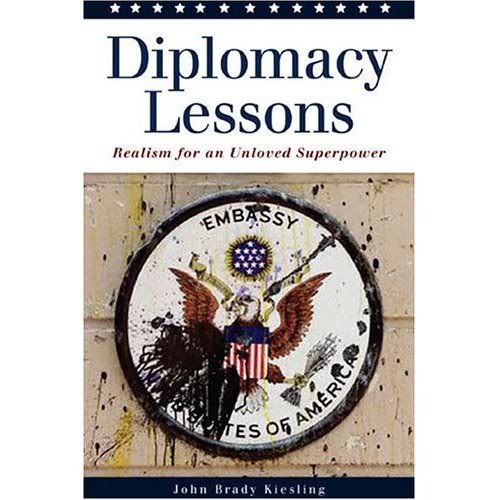
The ongoing conflict in Iraq has and continues to generate much literature. Most of it is predictably critical of the Bush administration’s handling of the issue. John Brady Kiesling’s Diplomacy Lessons: Realism for an Unloved Superpower is not an exception. There are several reasons, however, why this book can be considered unique and of particular interest to this newspaper’s readers.

First, Brady Kiesling is not simply a critic of the war. Kiesling was the first U.S. diplomat to resign in protest over Iraq and put his principles before his career. While many U.S. diplomats were similarly opposed to the war, only three went beyond quiet internal dissent. The upside of this is that unlike most of his colleagues Kiesling is free to express himself publicly.

Second, between 1997 and 2000, Kiesling was directly involved in U.S. policy towards Armenia, including a two-year posting at the Embassy in Yerevan, and later in Washington. More that than that, Kiesling was one of just a handful of State Department officials fluent in Armenian. He is an expert on Armenian architecture, having co-authored with Raffi Kojian the 1999 guidebook Rediscovering Armenia, when such books were few and far in between.

Finally, Kiesling is not only candid when it comes to U.S. policy or developments in Armenia. While his decision to leave the State Department rested on his principled opposition to the Iraq war, issues in Kiesling’s personal life could also have had a role. In the book Kiesling mentions his depression over divorce and being passed over for promotion. Such details give the book the rawness and honesty that most current events books lack.

America’s Interests First

A 20-year veteran of the U.S. Foreign Service, Kiesling resigned his position as political counselor of the U.S. Embassy in Greece in February 2003 to protest the impending invasion of Iraq.

No dove, Kiesling supported the U.S. interventions in the former Yugoslavia in the 1990s and the overthrow of the Taliban in Afghanistan following the September 11, 2001, terrorist attack. But Kiesling could not support a war that he believed at the outset was not in America’s interests.

While the book details the inner workings of the U.S. State Department, from Kiesling’s vantage points in Washington and during assignments around the world, this is not simply another memoir. In addition to his experiences, Kiesling outlines his vision of a realistic foreign policy that could best serve U.S. interests.

This reviewer sees this vision resting on five key theses.

Thesis One: The U.S. interest lies in protecting the welfare of its citizens. The challenge is to differentiate between truly representative policies and those pursued for either narrow or idiosyncratic reasons. Another caveat is that the U.S. public cannot always be trusted when foreign policy issues are decided – initial support for the war in Iraq is a case in point.

Thesis Two: Maintaining a moral high ground in the world is important for the U.S. interest. The world was truly awash in goodwill for the United States following the 2001 terror attacks. The world was nearly equally opposed to the U.S. military campaign in Iraq. While certainly U.S. policies should not be decided abroad, the combined weight of the world opinion, particularly of long-time allies, cannot be ignored.

Thesis Three: America’s foreign policy opportunities, either peaceful or military, are limited. (The military options are just fraught with more negative consequences). While the United States is at the zenith of its international influence, it still cannot mold countries or peoples completely to its own liking, and certainly the chances for success are less when U.S. fails to secure broad international support.

Thesis Four: Just as in the United States, foreign policies of America’s partners and adversaries are largely driven by domestic politics. Thoughtful and effective U.S. diplomacy demands understanding of these dynamics and patient coalition building based on shared interests.

Finally, Thesis Five is that the U.S. interest is best served when international agencies, like the United Nations, are used. While frequently maligned for their inefficiency and corruption (much like representative assemblies on the national level), there is no alternative to such organizations when it comes to garnering international legitimacy. The U.S. helped establish such organizations and funds their work precisely to help it project its interests and manage international crises.

The Armenia Experience

Three issues typically bring Armenia into the international media limelight: the Genocide, the unresolved Karabakh conflict and, every few years, elections.

Kiesling mentions the Genocide only in passing as an issue that is still “unsayable” in Turkey (p. 124), even as Turkish politicians have the temerity to accuse the U.S. and Israel of “genocide” in Iraq and Palestine, respectively.

Less directly, the issue of Armenian-Turkish relations comes up in the person of the Council of Foreign Relations’ David Phillips, who was between 2000 and 2004 contracted by the U.S. government to moderate the “Turkish-Armenian Reconciliation Commission” (TARC). In early 2003, Phillips was simultaneously engaged in drafting the State Department’s plans for the post-war governance of Iraq (p. 29). Phillips was then so upbeat about the war that Kiesling had second thoughts about resigning.

Kiesling shares two episodes from his Karabakh experiences. While still at the U.S. Embassy in Armenia in 1999, Kiesling met with Nagorno-Karabakh’s Prime Minister. Kiesling recalls that the U.S. was just launching the congressionally-mandated humanitarian assistance to Nagorno-Karabakh. As with other such programs, the aid was to be distributed through a contracting agency, in this case a non-government organization called Save the Children. Karabakh officials insisted that in order to operate, the NGO needed to formally register in NKR and pay taxes. Kiesling, on behalf of the State Department, refused and threatened to pull the assistance (p. 71). In the end, the NKR government amended its law that exempted all humanitarian organizations from paying taxes.

In another episode, Kiesling writes of his trip to Armenia with then-Deputy Secretary of State Strobe Talbott. At the time, Kiesling was deputy to Ambassador Carey Cavanaugh, the State Department’s Karabakh negotiator. Shortly prior to the visit, Presidents Robert Kocharian and Heydar Aliyev met and apparently made sufficient progress to elicit high-level U.S. attention. But it so happened that Talbott’s delegation arrived just hours before the October 27, 1999, terror attack at the Armenian parliament that killed senior Armenian officials and ended up paralyzing the Armenian government for most of the next six months. While many local and outside commentators saw domestic or foreign conspiracies, Kiesling is “reasonably certain that the timing was coincidental and that the plot was driven by a personal grievance” (p. 69).

A year and a half earlier, in March 1998, Armenia had held presidential elections in which then-Prime Minister Robert Kocharian defeated former Soviet Armenian leader Karen Demirchian in two rounds of voting. Kiesling, who was at the U.S. Embassy in Armenia at the time, recalls violations at nearly half of the electoral precincts he visited. But, Kiesling believes that “effective democracy-building must cope with the reality that self-seeking local officials are often more anti-democratic than the central government they help elect.” Having analyzed the electoral data, Kiesling concludes that Kocharian would have won the election anyway, but by a much smaller margin than the 59 to 41 percent officially reported (pp. 168-172).

Just days before resigning from the State Department in February 2003, Kiesling returned to Armenia to monitor the vote in which Kocharian faced re-election. As an observer with the Organization for Security and Cooperation in Europe (OSCE), Kiesling traveled to Kapan in Armenia’s southern Syunik province. Then too he observed violations, but he also noted that despite public unhappiness with the state of rule of law in the country, Kocharian retained sufficient legitimacy to hold on to power. Kocharian’s positions strengthened as “ordinary Armenians began to climb slowly out of the worst of their poverty” (p. 29). Kiesling’s election analysis is available online at www.bradykiesling.com/election_fraud_analysis.htm.

A Unique Contribution

Kiesling’s book is a welcome and unique contribution to the debate on U.S. foreign policy. The author combines a scholarly approach with practitioner’s experience and a storyteller’s wit to offer lessons of diplomacy that put theories to practice and transcend modern-day challenges, while also entertaining a lay reader. As someone with on-the-ground experience, Kiesling also offers a rare, informal insight into developments in Armenia from a U.S. diplomat’s point of view.

The launch

Before I forget - thanks to Karen V. for the idea. Although, I think others may have suggested this in the past, may be at a less opportune time. The whole point is pretty selfish: I'd like to have a reference to my writings in one place and, of course, I'd like feedback. So, here goes.