Emil Sanamyan's articles on Armenian-Americans, Armenia and its neighborhood.

Monday, March 12, 2007

"Turkey lost battle for history" and other news


The column below first appeared in the Armenian Reporter on March 10, 2007.

From Washington, in brief
By Emil Sanamyan


Turkey’s boosters admit they’ve “lost the battle for history” – but carry on lobbying

Turkish Parliament members will be lobbying the U.S. Congress against the Genocide Resolution with the help of a “Pink Book,” the Turkish Daily News reported on March 2. This colorful edition “includes detailed information and documents concerning the genocide allegation.”

But even veteran Turkey boosters aren’t buying into this approach. At a February 28 Open Society Institute roundtable discussion, former U.S. Ambassador to Turkey (1989-91) Morton Abramowitz counseled listeners on the Turkish efforts to deny the Armenian Genocide: “I think Turkey has lost, here at least, the battle of history. I don’t think there is anything you can do here which will convince legislators that this is an open question that you got to leave it to the historians. I don’t think that it is, rightly or wrongly, an effective argument here.

“And the basic argument, and one that has been made repeatedly, one that I made before the [1991] Gulf War… is the extraordinary and important ties between the two countries which legislators must understand and balance against whatever [are] their moral feelings. This is the only reasonable argument that can have an impact.”

Journalist Cem Sey with the Turkish service of Deutsche Welle (Germany) added: “You said that Turkey has lost the historical battle in the United States already. I believe Turkey lost it everywhere in the world, including Turkey.”

Abramowitz appeared to agree with that, as Sey continued: “Because after Turks understood that there had been some hundred thousands people died, everybody knew what happened. So, I think this is not the debate. “Therefore I don’t believe a resolution in the United States, like it was in Germany and other countries, that it will cause a big problem between the two countries. There will be serious [nationalist] backlash, I’m sure, but it will be temporary…”

* * *
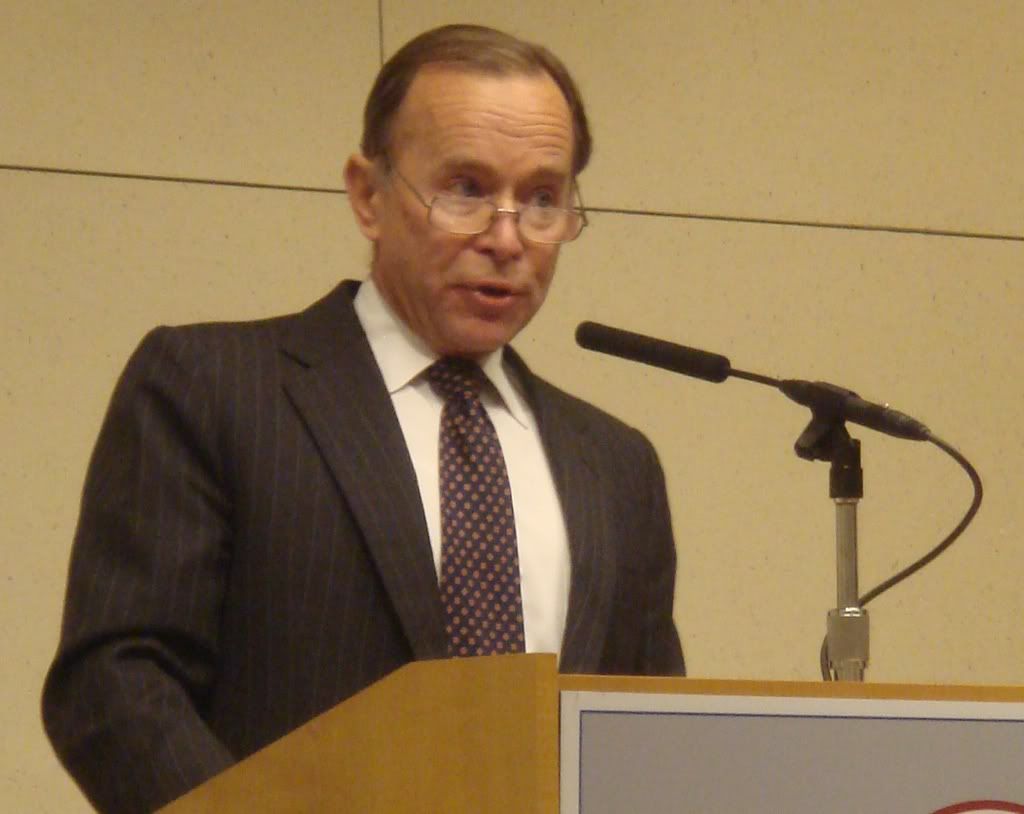


Another former Ambassador to Turkey, Mark Parris (1997-2000), used the “Abramowitz argument” in his “Don’t go cold on Turkey” op-ed in the March 3 Wall Street Journal.

In its response, the Armenian National Committee of America (ANCA) recalled that the souring of U.S.-Turkish relations were “loudly but falsely predicted” when President Reagan publicly affirmed the Genocide in 1981; likewise, whenever U.S. legislation has referred to the Genocide, no backlash has ever materialized.

“Despite threats of retribution, Turkey has taken only token steps against the European Parliament, Canada, France, Germany, Italy, Belgium, Argentina, Austria, the Netherlands, Poland, Russia, Sweden, Switzerland, and other states and international bodies that have recognized the Armenian Genocide. In fact, despite all its threats in 2001 against France's recognition of the Armenian Genocide, trade between France and Turkey grew 22 percent the following year, and has grown by 131 percent over the past five years,” the ANCA response went on.

In another response letter, Ross Vartian, the Executive Director of the U.S.-Armenia Political Action Committee (USAPAC), argued that “it is long past due for the United States to reaffirm Armenian and American history despite Turkish threats, and to support those in Turkey who serve democracy and reform by speaking freely.”

Senate committee stalled on Hrant Dink resolution, Hoagland nomination

This week, the Senate Foreign Relations Committee was to consider a resolution offered by its chairman, Sen. Joe Biden (D-DE), commemorating the life of Turkish Armenian journalist Hrant Dink and condemning his assassination. The proposed Senate Resolution (S. Res. 65) contains a reference to the Armenian Genocide, for discussion of which Dink was prosecuted. The AAA, ANCA, and USAPAC have all urged passage of this resolution.

But during the committee’s March 6 business meeting, its ranking member Sen. Dick Lugar (R-IN) requested that the resolution’s consideration be postponed (held up) until the committee’s next business meeting. ANCA reported that Lugar’s request came after “heavy State Department pressure” over the resolution’s language referring to the Armenian Genocide.

A spokesman for the State Department in effect confirmed its opposition to S. Res. 65 in present form, relating to the Reporter that “the State Department has consistently explained to members of Congress and their staffs our view that passage of any amendment that politically determines the definition of the horrific suffering of Armenians in 1915 is inappropriate and unhelpful.”

* * *
According to a Senate source, no committee action is anticipated on the nomination of Richard Hoagland to be Ambassador to Armenia. The nomination is “just sitting.” Foreign Relations Committee member Sen. Bob Menendez (D-NJ) placed a hold on the White House candidate in part to protest the Administration’s policy on the Armenian Genocide.

State Department narcotics report drops Azeri allegations

The “Narcotics Control Strategy Report” was released on March 1. This is one of over a dozen congressionally-mandated reports issued annually by the U.S. Department of State. The report contains a country-by-country analysis prepared by U.S. embassies, which rely mostly on local governments for information. One of these governments is Azerbaijan’s, which has long accused Karabakh and Armenia of everything under the sun, including drug running.

Last year’s report referred to the Azeri government’s allegation that Karabakh was one several routes used by international drug runners. While the State Department never endorsed such claims, the reference itself has been used by Azeris in their propaganda.

On April 5, 2006, NKR’s Foreign Minister Georgy Petrossian and Police Chief Armen Isagulov sent a letter to senior State Department officials once again denying the Azeri claims. The letter – made available to the Reporter by the Nagorno-Karabakh Republic’s office in Washington – stated in part that as early as “in 2002, the NKR Government called upon relevant international bodies to send an independent verification mission to Nagorno-Karabakh to assess the situation on the ground, but no action was taken.”

The Azeri allegations had been referenced in State Department narcotics reports since 1996. After NKR officials first complained in 2002, the report added references to Nagorno-Karabakh’s counter-proliferation efforts and stated that “the United States does not have independent confirmation of [Azerbaijan’s] allegations.”

In 2004, the report dropped Azeri allegations altogether, but they crept back into the report in 2006, before being removed again this year.

At the same time the report points out that unlike Armenia, “Azerbaijan is located along a drug transit route running from Afghanistan and Central Asia into Western Europe.” The same report says that Armenia’s currently modest drug problem could potentially be exacerbated should borders with Turkey or Azerbaijan open.

Friday, March 9, 2007

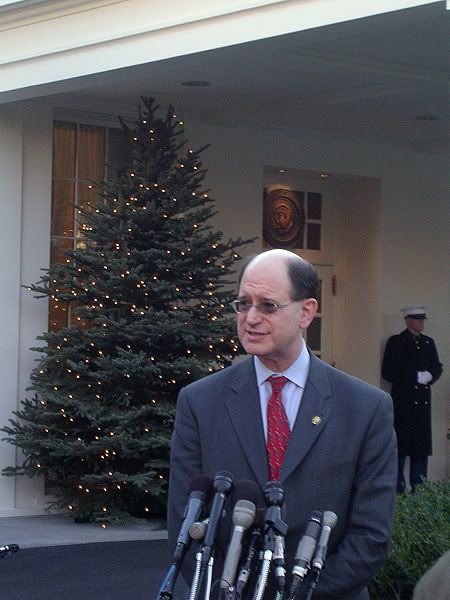
Congressman Sherman Interview


Congressman Sherman says the vote on the Genocide resolution is up to the Speaker
…And Karabakh’s future status is up to Armenians

Editor’s note: On February 28, a senior member of the House Foreign Affairs Committee Rep. Brad Sherman (D-CA) gave a quick interview to our Washington Editor Emil Sanamyan (see the fact box for information about the Congressman). Below is the transcript of that interview.

Reporter: What are the chances for the Foreign Affairs Committee consideration of H. Res. 106 in the near term?

Rep. Sherman: I think ultimately it will be a decision made by Speaker Pelosi. If either Speaker Pelosi or [Foreign Affairs Committee] Chairman [Tom] Lantos want, [the resolution] goes forward.

Reporter: What is the indication of the position taken by Chairman Lantos?

Rep. Sherman: I think that the chairman’s position is not known to me at this time. The Speaker – and she is obviously much more important to this process ultimately [for the resolution] reaching the House floor [to be voted on] – has been supportive of this resolution consistently in her term in Congress. I do know that the State Department is going to try to change Speaker Pelosi’s mind.

Reporter: Technically, can this resolution go to the House floor without Committee consideration?

Rep. Sherman: I would think that if Speaker Pelosi made it clear that she wanted it on the floor the Committee would act first. Yet, if for some reason the Committee did not act and the Speaker wanted it on the floor, it will be on the floor

Reporter: What is your reaction to the threats made by Turkish officials over this resolution?

Rep. Sherman: I believe French-Turkish relations improved after France passed the Genocide resolution, and I can’t imagine why the outcome would be any different for the United States.

Reporter: And your reaction to the Bush Administration’s opposition to this resolution?

Rep. Sherman: History is history, and it doesn’t change because certain [military] bases are strategically well-located. And if you want to be the world’s only superpower, you have to stay true to the truth. If instead the truth is something you negotiate, it is hard to think that the world is going to acquiesce in [the United States] being the only superpower.

Reporter: You have long supported Armenian-American issues. What are the reasons for that support?

Rep. Sherman: Because the last act of genocide is genocide denial. Because those who ignore history are doomed to repeat it. Those who obscure it are doomed to repeat it. Because Hitler was able to turn to his inner circle and say, “Who remembers the Armenians?” And if we don’t remember the Armenians, then Hitler will have correctly observed that ignoring the first genocide of the 20th century paves the way for other genocides.

Finally, because the ultimate Turkish acknowledgement of the Genocide is good for Turkey. Because, where would the United States be if we denied slavery? Or if we denied that we had committed genocide against quite a number of Native American peoples?

I would hope that if not in the resolution itself, [then] in the mix of discussion about the resolution, this resolution will be a humble resolution. With the humility of an Alcoholics Anonymous meeting, where we stand up and say, look, the United States has committed great crimes in its past, and other countries have as well, and it is time to acknowledge what happened in the Ottoman Empire. Not as if we who point it out do so out of a sense of overbearing smugness.

We should not be passing this resolution in smugness. We should be passing it because it is the truth, and because there is a lot of truth about the United States that we also have to acknowledge.

Reporter: Turning to another issue on the minds of many Armenian-Americans – the Karabakh conflict. How do you see it eventually resolved?

Rep. Sherman: I am not aware of any earth-shattering developments regarding Artsakh. It was tantalizing when [the parties] came close to an agreement [in the past].

The United States has got to disabuse the Azeris of the view that they are going to pump a lot of oil and get a lot of power and somehow create new realities. We should be re-doubling our efforts to serve as an intermediary, to try to have this issue resolved.

I think that the people of Artsakh have made it plain that they want to live in an Armenian state. Whether that is an independent, second Armenian state, or whether it is fully incorporated into the Republic of Armenia – it is for the Armenians to decide.

Reporter: Is ongoing U.S. security assistance to Azerbaijan undermining regional stability, and should Congress take a closer look at these assistance programs to Azerbaijan?

Rep. Sherman: First and foremost, you should require parity [in security assistance to Azerbaijan and Armenia] at least, if not favoritism of Armenia, which I think has been far more willing to settle the conflict than Azerbaijan. Aid to the military of Azerbaijan could be a problem, and aid that did not at least enshrine parity would be worse.

Given the fact that Azerbaijan is participating in the blockade of Armenia, I would like to see zero military aid. Certainly, military aid to Azerbaijan is not a good idea; but departing from parity is even worse.

* * *

SIDEBAR: Facts about Congressman Brad Sherman (D-CA)

Constituency: Represents California’s 27th district, located in the northern suburbs of Los Angeles, including parts of Sherman Oaks, Burbank, Northridge, Tarzana, Granada Hills, and Sunland.

Role in the 110th Congress: Chairman of the Foreign Affairs Subcommittee on Terrorism, Non-proliferation, and Trade. Original co-sponsor of House Resolution 106, affirming the U.S. record on the Armenian Genocide.

Personal details: Born in 1954, in Los Angeles. Jewish. J.D. from Harvard University, 1979. Attorney, accountant. Single.

Published in the Armenian Reporter, March 3, 2007

Turkey Continues Fight against H. Res. 106


Turkey continues its fight against H. Res. 106
Congressmen decry Turkey’s threats as “outrageous”
By Emil Sanamyan

Washington – A barrage of Turkish threats, warnings and fears over the congressional resolution affirming the U.S. record on the Armenian Genocide (House Resolution 106) continues. But congressional proponents are standing fast in their support for the measure that has been endorsed now by 176 House members, but is still yet to receive formal congressional consideration.

The U.S. capital is continuing to bear the Turkish version of “human wave” attacks over the anticipated congressional action on the Armenian Genocide resolution. From the top general of the Turkish Armed Forces, to formally independent media, to local chapters of Turkish students’ associations – there is an urgent effort to stop H. Res. 106.

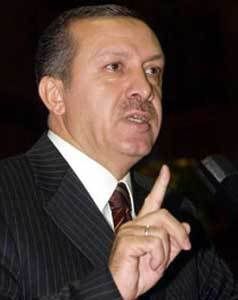
The campaign is taking place in the context of an ongoing standoff between the mildly Islamist government of Prime Minister Recep Tayyib Erdogan and Turkey’s nationalist-secular establishment, led by the Armed Forces Chief of Staff Gen. Yasar Buyukanit, and in effect backed by the former ruling political parties now in opposition.

The latter forces are arrayed against the anticipated bid by Erdogan for Turkey’s presidency this May. Since Erdogan’s party has a majority of seats in Parliament, which in Turkey elects the president, hardly anything short of a military coup could stop the election.

Erdogan’s government is likely to be blamed if H. Res. 106 passes because of its cozying up to Iran and the Palestinians, and simultaneous distancing itself from the U.S. and Israel. But current relations between the U.S. and the Turkish military may be even rockier over developments in Iraq.

As a result, both Turkish political camps are fighting hard against the resolution to reaffirm their nationalist credentials in an election year. Visits to the U.S. by the foreign minister and armed forces chief are being followed by dozens of Turkish Parliament members.

In addition to lobbyists already on its payroll, the Turkish government is also encouraging businesses with interests in Turkey and other concerned groups to oppose H. Res. 106 as harming U.S.-Turkish relations.

Jewish organizations are reluctant “to take on a losing battle”

The Turkish media and commentators continue to claim that both Israel and Jewish American organizations have promised to provide back-channel support against H. Res. 106.

Zeyno Baran of the Washington-based Hudson Institute claimed that “the American Jewish lobby…will be helpful because if the resolution passes, many Turks will also blame them for not helping, and this can further deteriorate relations between Turkey and Israel.”

According to the Jewish daily Forward, Turkey’s officials gave Jewish American organizations a similar message during a February 5 meeting in Washington – that not only the U.S., but Israel too would suffer should the resolution pass.

But representatives of Jewish American organizations told the Forward that they made no commitment to fight the resolution, and that “the Jewish community is paying lip service to Turkey on this issue, since all the organizations agree that little can be done to block the resolution [and they] are reluctant to take on a losing battle.”

Administration distances itself

At his February 16 press conference in Washington, Gen. Buyukanit said he was satisfied with the Bush Administration’s opposition to H. Res. 106. At the same time, the State Department began to distance itself from a potential congressional vote.

Asked on February 7 if U.S.-Turkish relations would be harmed by the resolution, as Turkish Foreign Minister Abdullah Gul has argued, Assistant Secretary of State for Public Affairs Sean McCormack responded: “Well, that's his assessment.” McCormack added that while the Administration is conveying Turkey’s “sensitivities” to Congress, “the Turkish government is well aware of our system of government, and they understand that Congress is an independent branch.”

But H. Res. 106 is far from being the only or even the most contentious issue on the U.S.-Turkish agenda. There appear to be irreconcilable differences on Iraq. The Turkish military wants the U.S. to put pressure on Kurds in Iraq, and the U.S. can hardly afford to do that considering the difficulties the U.S.-led coalition is currently experiencing.

Congressmen protest “outrageous intimidations”

In a letter made public on February 8, co-chairs of the 148-member Armenian Caucus Rep. Frank Pallone, Jr. (D-NJ) and Joe Knollenberg (R-MI) protested what they described as the “shameless threat” made by Turkish officials to cut off supplies to U.S. forces in Iraq should the resolution pass. The letter decried Turkey’s interference with U.S. congressional debate as “completely inappropriate,” and urged congressional leaders and the Administration to reject such “outrageous intimidations.”


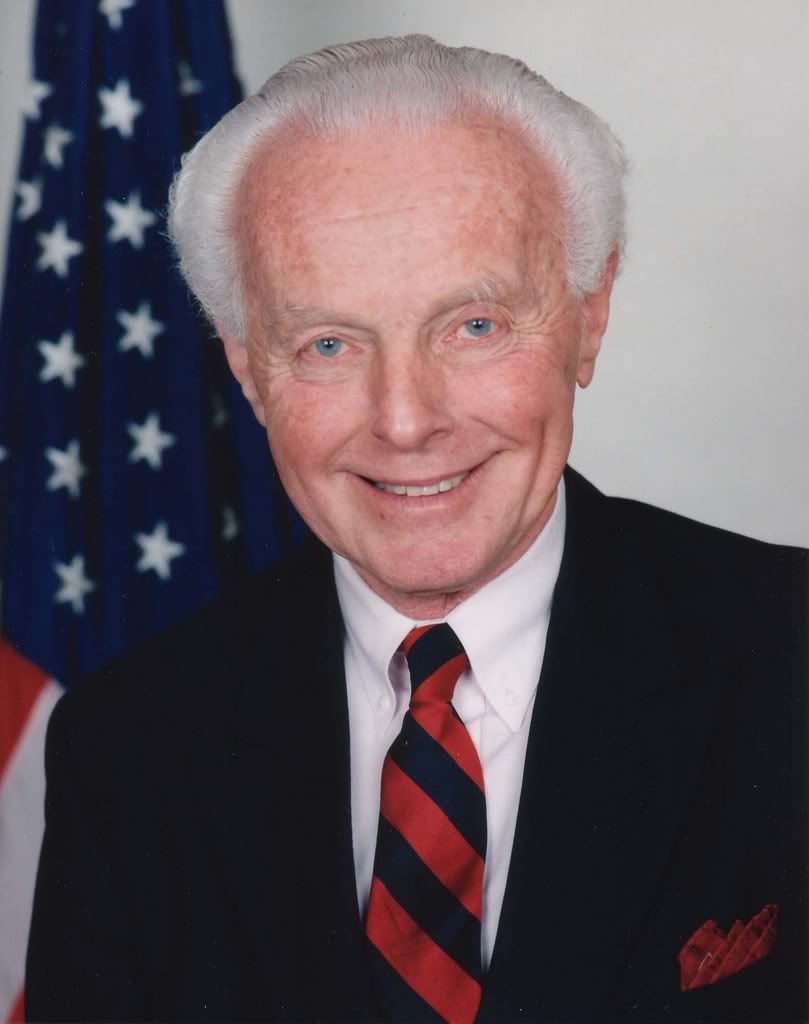
The House Committee on Foreign affairs chaired by Rep. Tom Lantos (D-CA) has yet to schedule a hearing or a vote on H. Res. 106. Lantos, who met with both Foreign Minister Gul and General Byukanit, “has not yet made a decision regarding this resolution,” said his spokeswoman Lynne Weil, as cited in the Forward on February 23.

The Forward further cited congressional sources as predicting that if “Rep. Lantos tried to block the genocide resolution in committee, [House Speaker Nancy] Pelosi would ask him to move it to the House floor for a vote and he would end up agreeing.”

Rep. Lantos has a mixed record on affirmation. A Holocaust survivor, Rep. Lantos nevertheless has opposed affirmation measures in the past, citing Turkey’s strategic importance. But in 2005, when a nearly identical resolution received Committee consideration, Rep. Lantos supported it, citing Turkey’s obstructionism of U.S. policies.

Published in Armenian Reporter, March 3, 2007

Azerbaijani military: More money, more problems?


A look at the Azerbaijani military: More money, more problems?
By Emil Sanamyan

EDITOR’S NOTE: This is a second article on this subject. The first column appeared in the Reporter’s February 14, 2007 issue and focused on the relationship between Azerbaijan’s growing oil production and military spending.

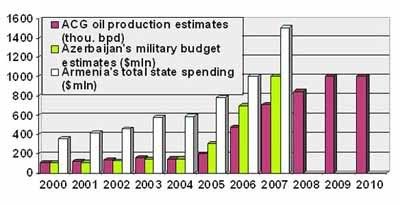
WASHINGTON, DC – Azerbaijan’s military spending grew from $146 million in 2004 to an estimated $1 billion in 2007. Most of this money has officially gone towards raises in officers’ salaries and improving soldiers’ conditions of service. (A future column will discuss Azerbaijan’s weapons acquisition.)

The purpose of spending over $2 billion in four years – other than Azerbaijani President Ilham Aliyev’s oft-stated desire to overtake Armenia’s total state spending – must be to improve the discipline, sense of purpose and fighting efficiency of the armed forces. Azerbaijani officials and sympathetic observers boast that such improvements have taken place.

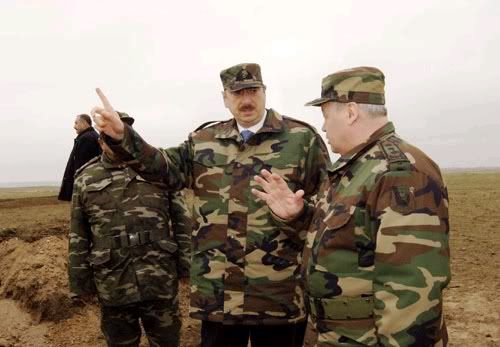
President Aliyev and his lieutenants have for years claimed that the Azerbaijani armed forces are superior to the Armenian military. In an effort to illustrate this point, the Azeri government helicoptered a group of Westerners to the Azeri side of the Line of Contact (LoC) in 2005.

Glen Howard of the DC-based Jamestown Foundation came back impressed that the Azeri officers he spoke with were educated “in the West, speak English, and are very bright.” Speaking last October at Johns Hopkins University, Howard endorsed the Azeri official view that the widely held perception of Armenian military supremacy was a “myth.”

Like Howard, military journalist Scott Taylor of the Canadian Esprit d’Corps magazine never visited the Armenian side of the LoC. But he has been on the Azeri side twice – in July 2006 and again last month. He writes that both the Baku-based Western military attaches and former Azeri soldiers are critical of the Azeri army’s readiness.

In one example, a 22-year-old who just completed his tour of duty told Taylor that he had a “lack of respect for the [Azeri] government and lack of confidence in [Azeri] officers…. We had only 40 days of basic training and then we manned the front lines for 18 months." (Armenian conscripts are deployed to the LoC after six months of training.)

These flaws in training, as well as reports of widespread corruption, may explain in part why the Azeri press is inundated with negative coverage of developments in the military.

Collusion with the enemy

Young Azeris born in the 1980s, raised in the 1990s, and now being drafted into the military have experienced nauseating amounts of state propaganda about the “Armenian enemy.”

Unlike older generations, hardly any of these young men have ever met an Armenian, or even seen an Armenian on television. The Azeri government regularly censors out “Armenian themes” from TV programs broadcast by foreign channels into Azerbaijan. Russian and even Turkish performers with suspected Armenian roots are barred from the country.

So it takes a special kind of desperation for young Azerbaijanis in uniform to seek relief from the Armenians. Even so, five Azeri servicemen risked minefields and sentries to cross the Line of Contact in 2005 – and all were imprisoned on “treason” charges upon their repatriation to Azerbaijan.

Nevertheless, three more Azerbaijani servicemen crossed over in December 2006. Two of these have since been repatriated and are now facing “treason” charges. The third is refusing repatriation and is reportedly seeking asylum.

According to findings published in the Baku newspaper Zerkalo, the Azeri government reported or otherwise failed to cover up 35 peace-time deaths in 2004, 39 in 2005, and 48 in 2006 – the vast majority of these due to fratricide, suicide, or “accidents.”

In the first three weeks of 2007 there were eight additional fatalities. Many more young Azerbaijanis are avoiding military service or paying bribes to be placed in what are known as “elite” units in the capital, Baku.

Elite unit corruption

One such “elite” unit is the 112th Security Brigade of the Azeri Defense Ministry, based in Baku and used to guard government buildings and other installations. Servicemen from this brigade have also served in U.S.-led peacekeeping operations in Kosovo, Afghanistan, and Iraq. Many of the officers have received at least some training in Western military colleges.

But this unit too has been gripped by scandals. According to the Turan news agency, the Brigade first came under investigation over the case of one of its non-commissioned officers (NCOs) who served with the 150-person peacekeeping unit deployed as interior guards inside a perimeter secured by U.S. Marines at a hydro-electric plant in Iraq. After this NCO converted to Christianity, he was “recalled to Azerbaijan, accused of treason and fired from the army.”

Last September, one of the Brigade’s senior officers, a lieutenant colonel, talked to investigators looking into the NCO’s case, providing them with charges of widespread corruption. The officer was quickly demoted and shoved into a much less “elite” unit in one of the provinces.

Last month, this officer went to press. Apparently, Azeri commanders embezzle salaries of their soldiers serving in Iraq. These salaries are underwritten by U.S. taxpayers to encourage as many countries as possible into the U.S.-led “Coalition of the Willing.”

According to this and other Brigade officers, the Azeri “peacekeepers,” some of whom bribed their way to serve in Iraq, presumably to earn higher salaries, are engaged in looting of the Iraqis and even stealing from U.S. servicemen.

This is just one of the dozens of allegations made by senior officers, which have become public in the last two to three years alone – presumably the period of significant increases in these officers’ salaries.

Leadership problem?

Much of the Azeri media commentary targets Defense Minister General Safar Abiyev as being at the root of problems in the Azeri military. Abiyev has been in his position for 12 years – longer than any defense chief in the region, and possibly the world. While for years there have been rumors that Abiyev’s dismissal is imminent, he has remained in the post, most likely because of his total loyalty to the ruling Aliyev family, and possibly because there are few alternatives.

In these 12 years, the Azeri military has gone through a series of purges, wherein thousands of senior military and security officials have been accused of disloyalty and imprisoned since the 1990s. The latest purge has been underway since 2003.

Virtually none of the officers bearing military credentials earned during the Karabakh war have remained in the military or other security agencies.

Amid the current disarray, the Zerkalo newspaper claimed recently that the Azeri government would be inviting a senior Turkish military officer to straighten out the military. But Turkish generals have tried to fix the Azeri military since 1992, with little to show so far.

(To be continued in future issues…)

Armenia’s Pre-Election Campaign Spills Into Washington


Armenia’s Pre-Election Campaign Spills Into Washington
By Emil Sanamyan
Special to the Armenian Reporter

WASHINGTON, DC – Two Armenian political party leaders were in Washington last week to raise concerns about what they see as unfair treatment of opposition parties in the run-up to Armenia’s May 12, 2007, parliamentary elections. But a Yerevan expert monitoring the pre-election process argued that the picture they presented was incomplete.

Artur Baghdasarian of the Orinats Yerkir (Country of Law) Party and Aram Sargsyan of the Hanrapetutyun (Republic) Party complained of what they see as government-imposed restrictions on their access to television and their ability to hold meetings with supporters around the country.

Speaking at the Carnegie Endowment for International Peace on February 13, Sargsyan expressed “grave fears that we will not see a free and fair vote,” and predicted that the government would try to maintain control at all cost, including through pressure and fraud.

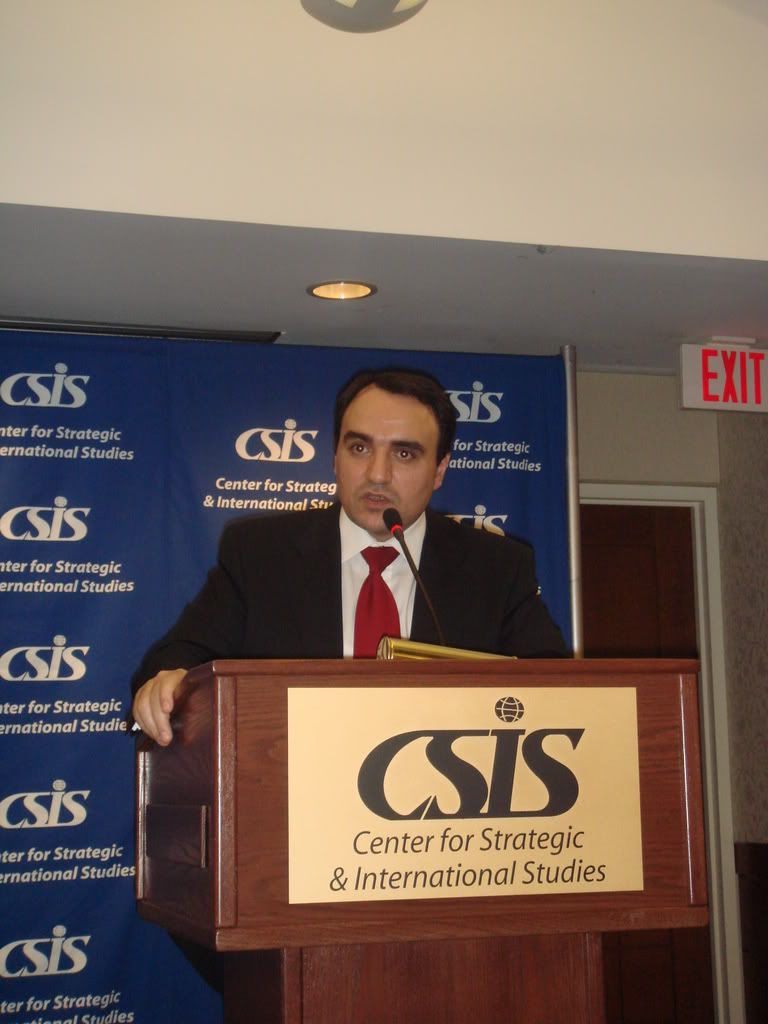
But at a February 15 talk at the Center for Strategic and International Studies, Baghdasarian argued that he remains optimistic that his party will be successful in its “struggle for democracy,” and that clean elections are possible.

Aleksandr Iskandarian is with the Yerevan-based Caucasus Media Institute (CMI), a non-partisan organization conducting pre-election monitoring with funding from the Council of Europe. In a phone interview with the Armenian Reporter, Iskandarian discussed CMI’s media monitoring of four of Armenia’s TV channels and two major radio stations.

According to CMI research, with the exception of Public TV (H1) these outlets provide less coverage of governing (incumbent) parties than of other political forces. (See for details.)

“Political entities in Armenia have different levels of resources, and as a result they have different levels of access to the population,” said Iskandarian. “Smaller parties have less access, but since Armenia is a small country they could still reach out to the electorate door to door or through meetings. Neither Orinats Yerkir nor Hanrapetutiun are actively engaged in that.”

According to the U.S.-commissioned Armenia-wide opinion poll conducted last year by the Gallup Organization, the U.S. International Republican Institute, and the Armenian Sociological Association, and reported by Regnum newsagency, Baghdasarian was the fourth most-trusted politician in Armenia, with a 9 percent rating, behind opposition politician Artashes Geghamian (15 percent), pro-government businessman Gagik Tsarukian (13.5 percent) and President Robert Kocharian (12 percent). Aram Sargsyan’s rating was under 1 percent.

Baghdasarian’s party was part of the ruling government coalition in 2003-2006, until he was forced to resign as Parliament Speaker, citing policy disagreements. Sargsyan was briefly Armenia’s Prime Minister between 1999 and 2000, and joined the opposition after being dismissed from the post by President Kocharian.

Writing in the Eurasia Daily Monitor on February 20, Yerevan-based political analyst Emil Danielyan predicted that Baghdasarian’s Orinats Yerkir, as well as the coalition’s Armenian Revolutionary Federation and opposition parties led by former presidential candidates Stepan Demirchian and Artashes Geghamian, will contest the upcoming elections without forming pre-election blocks with other parties.

Sargsyan, on the other hand, is seeking an electoral alliance with the Heritage party of Raffi Hovannisian and the National Democratic Union of Vazgen Manukian, as well as Demirchian.

But according to Iskandarian, most opposition parties have limited support and the main competition in the upcoming elections is likely to be between two pro-government forces: the ruling Republican Party (HHK) and Tsarukian’s Prosperous Armenia Party (BHK).

Danielyan wrote that the HHK, led by Prime Minister Andranik Margarian and Defense Minister Serge Sargsian, is “heavily relying on its grip on most central and local government bodies” to recruit supporters. Tsarukian’s BHK, Danielyan continued, has been engaged in “nationwide provision of agricultural relief, free medical assistance, and other public services,” all of which “seems to be translating into…a large number of ‘clean’ votes” for an ally of President Kocharian.

Iskandarian, while concerned that methods employed are often undemocratic, argues that they still reflect a real political competition for votes, as opposed to an effort to stuff the ballot. “The real political dynamic in Armenia is the emergence of several competing parties within the political establishment,” Iskandaryan explained. “This development has replaced the old government-opposition dynamic.”

Published in Armenian Reporter, February 24, 2007

Turkish Security Agencies Linked to Dink’s Assassination


Turkish Security Agencies Linked to Dink’s Assassination
In Wake of Murder Local Dissidents Fear for Their Safety
By Emil Sanamyan

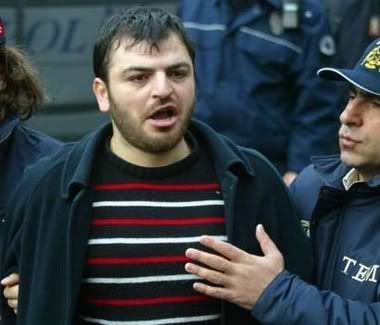
Washington, DC – The confessed conspirator in Hrant Dink’s assassination has implicated a senior police official in the murder, Turkish media reported since February 10, 2007. Police denied the allegation and threatened legal action against the media reporting them.

As this paper reported previously, Turkish Prime Minister Recep Tayyip Erdogan and his deputy Mehmet Ali Sahin said they suspect a “deep state” conspiracy behind the plot to kill Dink. The reference is widely used in Turkey to connote an ultra-nationalist mafia encompassing parts of the state bureaucracy, security forces, and criminal world believed to be behind much of the violence in Turkey.

But caught in a balancing act with the military-secular establishment, Erdogan’s government seems unlikely to be able to effectively challenge these forces, especially ahead of this year’s elections, when all parties are courting nationalist voters.

Turkish Media Names “Deep State” Suspects

Turkish newspapers report that a suspect in the Dink murder case, Yasin Hayal, told investigators that the order to kill Dink came from Trabzon police counter-terrorism chief Yahya Ozturk via police informant Erhan Tuncel. Hayal confessed to training and arming Ogun Samast, charged with murdering Dink on January 19. Tuncel has so far refused to testify. Ozturk denied the claim.

The allegation came just days after Turkish TGRT television aired footage of police and gendarmerie officers posing for “souvenir” photos with Samast and praising his actions shortly after he was detained as a suspect in Dink’s murder. The officers pictured were reportedly dismissed or reassigned from their posts.

Further, the Turkish daily Radikal reported that Samast also received very warm treatment from jail staff – a claim also denied by the authorities. Hayal, Tuncel, and Hayal’s relative Coskun Igci were reportedly recruited by the Trabzon Security Directorate following the October 24, 2004, bombing of a local McDonalds restaurant, organized by Hayal and Tuncel. In return, Hayal was given a lenient sentence and Tuncel was not charged.

The daily Hurriyet reported that Hayal also claimed that after the 2004 bombing Tuncel introduced him to a National Intelligence Organization (MIT) operative Ihsan (or Ismail) Kasap, who offered help in exchange for cooperation. MIT denied the allegation.

(In a Radikal article published soon after the murder, Professor Taner Akam wrote that shortly before his death Dink was called to the Istanbul Governor’s office, where he was threatened by an MIT official and the Lieutenant Governor. The English version of Akam’s article was carried in the Reporter’s February 10, 2007 edition.)

Tuncel is said to have received an equivalent of $175 after reporting to police on February 17, 2006, of Hayal’s intention to kill Dink. Igci similarly informed Gendarmerie of Hayal’s plan in June 2006. The information was relayed to respective headquarters, but the agencies are not known to have taken any action.

On February 13, Hurriyet reported that Hrant Dink’s widow Rakel has petitioned for charges to be filed against officials accused of negligence in the case.

Istanbul prosecutors investigating Dink’s murder are said to have formally inquired with MIT, the Security Directorate (police) and Gendarmerie (internal security forces that are part of the Turkish military), whether Hayal, Tuncel, and Igci were on the payroll of these agencies as they had claimed. The Turkish government is also probing the performance of Trabzon and Istanbul police, with several senior officials having been dismissed already.

Turkish Dissidents Targeted in “Organized Campaign”

More than 100,000 people marched at Dink’s funeral and protested both the murder and the state’s anti-democratic policies. But the murder has also been followed by a nation-wide nationalist backlash.

The Agence France Presse (AFP) reported last week that local intellectuals who have criticized Turkey’s official policy on the Armenian Genocide and other “sensitive” issues are growing increasingly anxious for their safety since Dink’s murder.


The news agency reported that “speculation has been rife here that Nobel Laureate Orhan Pamuk has fled the country over security concerns, ever since he left for New York last month to teach at Columbia University.” Pamuk, who like Dink had been prosecuted for publicly commenting on the Genocide, was threatened by Hayal as the latter was charged with organizing Dink’s murder. Sabah has reported since then that Pamuk plans to fly to Istanbul on April 5.

AFP writes that Professor Baskin Oran, who authored a 2004 government-sponsored report that criticized Turkey’s minority policies, has also received threats, and in a recent newspaper column decried a “culture of lynching” in Turkey.

The BBC reported that Professor Murat Belge, who was prosecuted for his remarks at a 2005 Istanbul Conference on Ottoman Armenians, is under 24-hour police protection. Belge told BBC, “Everyone is in danger. This is getting very savage.”

Erol Onderoglu of “Reporters Without Borders” told AFP that the threats against intellectuals were not isolated acts, but an organized campaign.

EDITOR’S NOTE: This report benefited from Hakob Chakrian’s translations from the Turkish press as published in the Armenian daily Azg on Feb. 14-15, 2007, and English versions of the Turkish dailies Hurriyet, New Anatolian, Sabah and Zaman).

Published in the Armenian Reporter, February 24, 2007

Azerbaijani Military: Record Spending from Shallow Waters


Look at the Azerbaijani Military: Record Spending from Shallow Waters (First in a Series)
By Emil Sanamyan


EDITOR’S NOTE: The Azerbaijani government has repeatedly threatened a new war against Armenians. In the last few years, its rhetoric has also been matched by growing military spending and some weapons acquisition. Armenians are taking notice. Armenia’s National Security Strategy identifies Azerbaijan as the most imminent external threat to the country’s security. This column, slated to appear with some regularity, will discuss relevant developments in Azerbaijan and their impact on Armenia. The first column focuses on Azerbaijan’s military spending.

WASHINGTON, DC – The source of Azerbaijan’s growing military spending lies in shallow water, some 100 miles due east-south-east of the capital Baku.

Therein lies a large oilfield first discovered by Soviet geologists, but never fully developed until now. Growing production from that oil field and growing prices for oil have given a terrific boost to the Azerbaijani government’s revenue – and much of that revenue is being spent on the military.

In an apparent form of psychological pressure, Azerbaijan’s President Ilham Aliyev promised that his country’s military spending would soon surpass Armenia’s total state spending.

Field of the Commissars

The oil field in question is actually a collection of three fields initially respectively named after the sun (Guneshli), Soviet oilman Mikhail Kaverochkin (now known as Chirag) and the legendary 26 Baku Commissars (Soviet-era heroes of the Revolution, now renamed Azeri) – the last field providing the bulk of new oil production.

The latter two fields have been disputed by Turkmenistan. (The Azerbaijan-Turkmenistan maritime border is still undefined, as is the border with Iran). But this did not stop the consortium led by British Petroleum (BP), which began production (that is, pumping oil) from Azeri-Chirag-Guneshli (ACG) in 1997.

Since then, production has grown from just over 100,000 barrels per day (bpd) in 2001 to close to 500,000 bpd in 2006. BP currently “anticipates production will plateau … at around one million barrels a day by 2009.” In other words, after 2009, the oil will begin to run out at ACG.


Budget Race

The Azerbaijani government has set up the State Oil Fund to collect profits from ACG. Between 2001 and 2006 the Fund grew from $360 to $900 million – minus some $1.5 billion transferred from the Fund to the state budget.

In January 2006, for example, $600 million was transferred from the fund to the budget just as Azerbaijan announced doubling of its defense budget. While the BP-run ACG is certainly not the sole source of revenue for Azerbaijan, it is the single largest one.

According to BP-Azerbaijan’s CEO John Woodward, Azerbaijan’s profits from ACG amounted to over $2 billion in 2006, or about one-half of all state revenues. Should world market prices stay at over $50 per barrel of oil, President Aliyev estimates total revenues from hydrocarbon production to amount to $140 billion by 2025 (including profits from ACG as well as other projects), with profits bulging around 2010 and averaging out to about $7 billion a year for the next 20 years.

While the Azerbaijani government does have a tendency to exaggerate, it may be extrapolated that Azerbaijan’s military spending could reach as much as $7 billion a year – or more realistically (considering the country’s and its ruling elite’s other needs) several billion dollars a year: that is, three to five times the current level.

Since President Aliyev made it his goal last year to have Azerbaijan’s military spending surpass Armenia’s total state spending, such increases are likely. (Armenia’s state spending for 2007 is estimated at about $1.5 billion: still 50 percent higher than Azerbaijan’s planned military spending.) In pursuit of Aliyev’s goal, Azerbaijan is capable of doubling its military spending in 2008 and, possibly, doubling it again in 2009. But Armenia’s state spending, which has grown at a record pace itself, is likely to catch up in subsequent years.

Published in the Armenian Reporter, February 17, 2007