Emil Sanamyan's articles on Armenian-Americans, Armenia and its neighborhood.

Monday, August 27, 2007

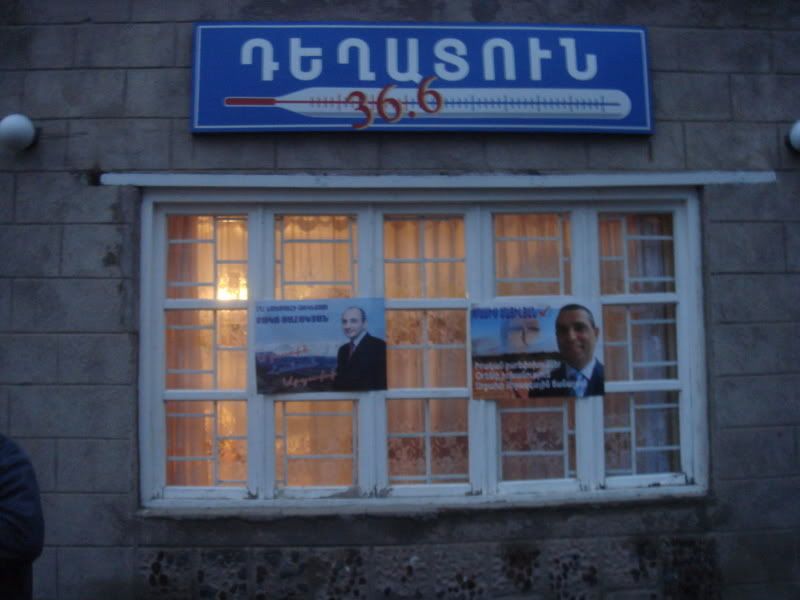
Bako Sahakian elected Karabakh President

Originally published in the Armenian Reporter for July 21, 2007.

Bako Sahakian elected Karabakh President in landslide
Election marked by high turnout, judged “free and fair”
By Emil Sanamyan


STEPANAKERT – According to preliminary results of the Central Election Commission (CEC) of the Nagorno Karabakh Republic released in the morning of July 20, Bako Sahakian is on his way to be certified as the victor in the July 19 election and the next president of NKR.

With 67,695 votes counted for all candidates, NKR CEC Chairman Sergei Nasibian reported that Mr. Sahakian led with 57,828 votes or 85.42%, followed by Masis Mayilian with 8,270 votes (12.21%), Armen Abgarian with 856 votes (1.26%), Hrant Melkumian with 532 votes (0.8%) and Vania Avanesian with 202 votes (0.3%).

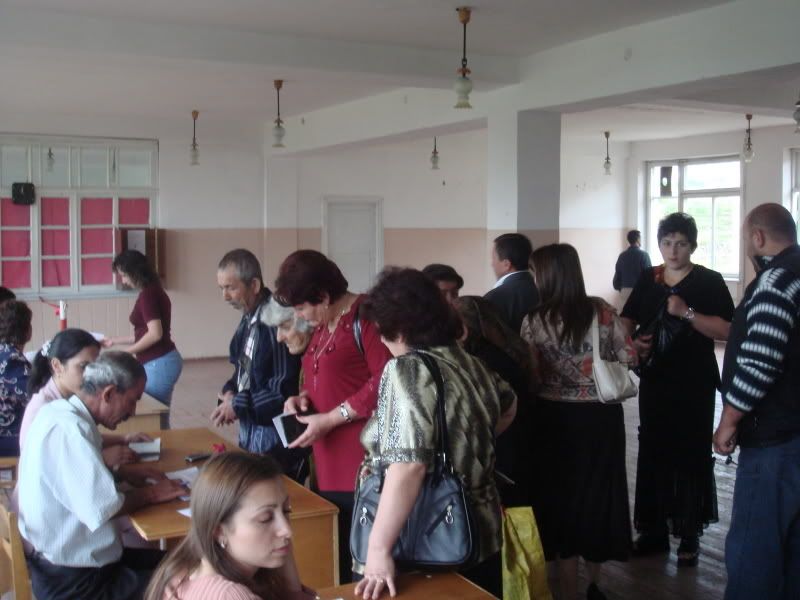
Of the 92,152 registered voters in NKR, 71,285 (or more than 77%) turned out to vote in the election. The voters were most active in Askeran (82%) and New Shahumian (80%) regions, with the turnout lowest in Stepanakert (55%).

The report of the Independent American Monitoring Delegation released on July 20 described the elections as “conducted freely and in a transparent way according to both the laws of Nagorno-Karabakh and international standards.”

The American monitors were led by retired Ambassador Vladimir Matic, a former senior Yugoslav diplomat now teaching international relations at Clemson University, and Paul Williams, former State Department lawyer and director of the Public International Law & Policy Group.

Both Amb. Matic and Mr. Williams monitored Karabakh elections in the past and they pointed to “steady progress in building democratic institutions and developing the practice of participation in the political process.”

Other observers from Europe, Russia, Armenia and other former Soviet republics largely concurred with the view of the American delegation.

This correspondent was able to visit several polling stations in Stepanakert and Shushi, and observed an orderly and transparent voting process.

As the voting concluded at eight in the evening on July 19, the local public television aired live the counting process from a number of precincts around Nagorno Karabakh. Mr. Sahakian, who held cabinet-level positions in security and law-enforcement since 2001 and was backed both by the incumbent government and parliamentary opposition, took an early commanding lead.

The campaign of Mr. Sahakian’s main opponent Mr. Mayilian filed more than a dozen complaints to the CEC claiming procedural violations during voting. CEC’s Mr. Nasibian said that about half of these complaints were addressed throughout July 19, with the rest still under review as of press time.

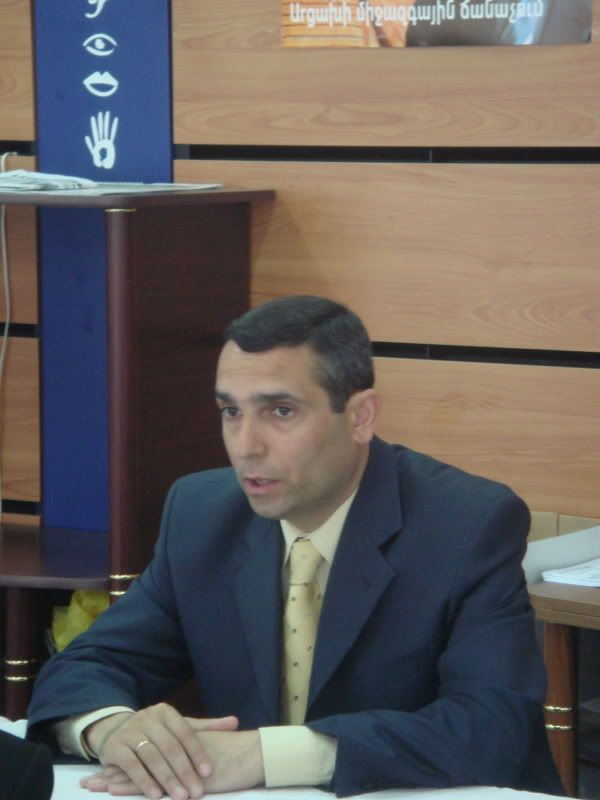
Mr. Mayilian, speaking at a press conference in the afternoon of July 20 said that it would be “fair to note that [violations] had no decisive impact on the final results.” He said he will congratulate Mr. Sahakian for his victory as soon as the final results are published. “The most important thing,” he said, “is that the supremacy of the law won in this country and that means a victory for our country.”

Amb. Evans awarded by Genocide scholars

Originally published in July 14, 2007 Armenian Reporter.

Scholars of Genocide award Amb. Evans
By Emil Sanamyan


YEREVAN – The diplomat whose career was cut short by the U.S. State Department after he spoke openly about the Armenian Genocide was awarded by the International Association of Genocide Scholars (IAGS) this week.

Former U.S. Ambassador to Armenia John Evans received the IAGS’ Raoul Wallenberg award on July 12 during the association’s week-long conference in Sarajevo, Bosnia and Herzegovina.

The IAGS conference agenda said that the award went to Amb. Evans “for speaking out when diplomats are expected to remain silent, and for calling upon the United States government to recognize the Armenian Genocide.”

In his acceptance remarks made available to the Armenian Reporter, Amb. Evans stressed that his effort was certainly in a different league that that of Mr. Wallenberg, a Swedish humanitarian who under diplomatic cover in WWII Hungary helped protect Jews from the Nazi Holocaust.

“I simply violated a strict taboo, and differed publicly with my government, when, at UCLA and Berkeley in 2005, I used the term "genocide" to describe --accurately, in my view -- what happened to the Armenians of Anatolia in 1915,” Mr. Evans said.

He added that while “nothing can fully compensate the Armenian people for the death and destruction they suffered… at a minimum the truth should be affirmed,” as has been done in various national parliaments and can be done in the U.S. Congress should the House of Representatives’ leadership schedule a vote on the Resolution 106, supported by 221 members of Congress as of July 12.

IAGS chaired by Israeli scholar Dr. Israel Charny has previously spoken out in support of defining as Genocide the Armenian experience in the Ottoman Turkish Empire

Mr. Evans also pointed to the recent insurance settlements over unclaimed policies held by Armenians who were murdered in the Genocide, but added that “more needs to be done.”

“Bottling up the truth and treating it as taboo gets us precisely nowhere,” he stressed. “This long-standing problem dating from the early years of the 20th century needs to be fairly and honestly dealt with, for the good of both Armenians and Turks, and for the future stability of the region. “

At the same conference, another IAGS award went to Turkish publisher Ragip Zarakolu for “outstanding contributions to the battle against deniers of the Armenian Genocide and all denials of Genocides.”

Rep. Tierney interviewed on visit to Baku

First published in July 14, 2007 Armenian Reporter.

Rep. Tierney discusses Iran concerns with Azeri officials
Clarifies his position on the Karabakh conflict
by Emil Sanamyan


YEREVAN – Congressman John Tierney (D-Mass), member of the Select Committee on Intelligence, was last week in Baku where he met senior Azerbaijani officials on July 3.

Although Azerbaijan’s state news agency AzerTag reported the next day that talks focused on bilateral relations, Rep. Tierney told the Armenian Reporter in a telephone interview on July 13 that the focus was really Iran.

Azertag also reported that “considering the activities of the Armenian community in the United States, [Rep. Tierney] stressed the importance of the comprehensive information he received about [Azerbaijan] and the Armenian-Azerbaijani, Nagorno Karabakh conflict during his meetings.”

Asked to comment if the description was accurate, Rep. Tierney said that he “assume[s] that the [Azeri officials] are putting the best face on what they wanted to talk about and that is to be expected.”

“They were quite aware that I am a member of the Armenian Caucus [in Congress], so I did not want them to think that I was going there surreptitiously... I also told them that I was married to an Armenian, so [the Karabakh issue] feels closer to home.

Discussing his position on the conflict, Rep. Tierney made it clear that he and other Caucus members “oppose the blockade, oppose violence, oppose any renewed aggression, and want the will of the people of Nagorno Karabakh to be respected.”

Rep. Tierney confirmed that the trip was part of his work on the intelligence committee. “The concern that we have is that [the Caucasus countries] work with us cooperatively in the understanding that Iran poses a potential threat to all of them… whether through international terrorism or otherwise.”

Rep. Tierney added that in Azerbaijan one of the topics “discussed [was] the large Azeri population in Iran and how that situation can go both ways. To some extent this could be a force that could moderate things going into Iran, because they have a concern that those folks not turn against Iran and become a problem. On the other hand it makes things difficult, because it facilitates infiltration from Iran, intelligence and other people, into Azerbaijan.”

U.S.-Azerbaijani security talks in Washington

Originally published in July 14, 2007 Armenian Reporter.

U.S., Azeri officials discuss security issues
Azerbaijan’s threats over Karabakh, democratic record glossed over
By Emil Sanamyan


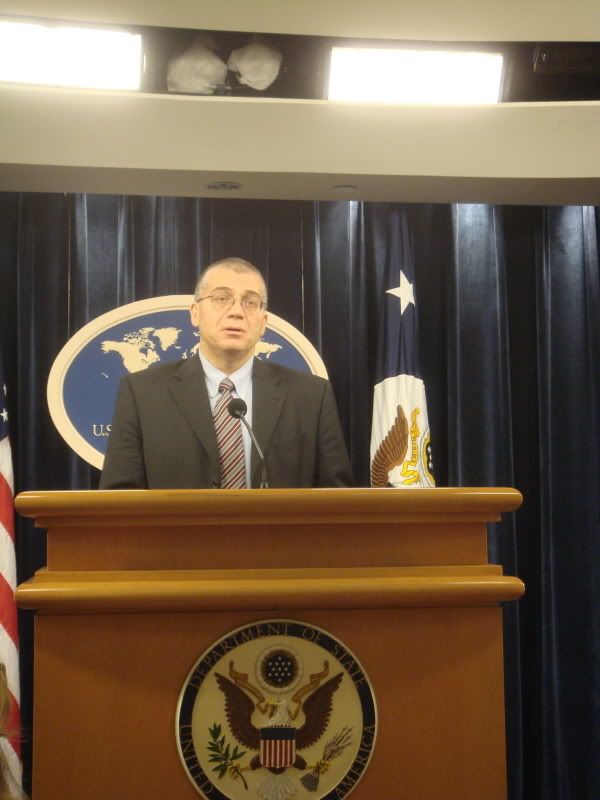
WASHINGTON – U.S. and Azerbaijani officials discussed security cooperation in talks held here this week. Deputy Foreign Minister Araz Azimov led a delegation that included officials from six of Azerbaijan’s seven militarized agencies to the U.S. for the “10th annual bilateral security dialogue.”

The visit was originally scheduled for April but it was postponed after Azerbaijan protested a correction to a passage pertaining to the Karabakh conflict in one of State Department’s reports that was later reversed.

While U.S. is seeking Azerbaijan’s cooperation to undermine Russian energy dominance in Eurasia and help contain Iran, Azerbaijan’s own domestic record and threatening posture towards Armenia appear to be taking a back seat.

In a July 9 press-conference, Mr. Azimov said that his government was ready for an “increased partnership with the U.S. whose commitment to Azerbaijan’s… sovereignty and total integrity remains unswerving,” a veiled reference to Azerbaijan’s claims on Karabakh.

Deputy Assistant Secretary of State Matt Bryza weighed in that while his government has a “deep commitment to Azerbaijan’s… territorial integrity,” in the matter of the Karabakh conflict it is also looking for a compromise between that principle and “people’s right to self-determination.” And, he added, “there’s no universal formula… to do that.”

Mr. Bryza did not raise Azerbaijan’s continued threats to launch a war in Karabakah. He described cooperation on security, energy and democratic reform as the three focal issues in bilateral discussions.

Asked if the matter of the recently intensified crackdown on mass media in Azerbaijan, particularly the imprisonment of Eynulla Fatullayev had been raised in talks, Mr. Bryza said that “we’re going to do it probably tomorrow.”

But Mr. Azimov retorted that such issues are not “related to the current agenda of my presence here” and that security cooperation and democratic issues should be addressed separately.

Meantime, U.S. human rights advocates argued during a July 12 congressional hearing that U.S. “could better balance human rights promotion with other strategic interests,” the Washington-based Freedom House reported the same day.

The think tank’s executive director Elizabeth Windsor said in a statement that Azerbaijan, like Cuba and Egypt “arrests journalists for practicing their profession, stifles meaningful political competition, shows a blatant disregard for internationally recognized human rights, and seeks to isolate its people from the global dialogue on freedom.”

Unlike Cuba, which is under U.S. embargo, both Egypt and Azerbaijan, including their security agencies directly implicated in human rights violations, are recipients of U.S. assistance.

When first announced last week, the hearing was titled “Is there a Human Rights Double Standard: U.S. Policy Toward Azerbaijan, Cuba and Egypt.” But earlier this week the title was changed to “Ideals vs. Reality in Human Rights and U.S. Foreign Policy.”

Interview with Dr. Ludmila Grigorian

Originally published in July 14, 2007 Reporter.

Will the Armenian-Azerbaijani dialogue continue beyond June 28?
One of the participants Ludmila Grigorian recounts the day and looks to the future


Editor’s Note: For nearly a year and a half, the Ambassadors of Armenia and Azerbaijan to Russia, Armen Smbatian and Polad Bul-bul-ogly, developed and lobbied the idea for a joint trip to Karabakh and capitals of Armenia and Azerbaijan. This unique initiative finally materialized on June 28, and, in addition to the Ambassadors themselves, it involved four other prominent individuals from each side.
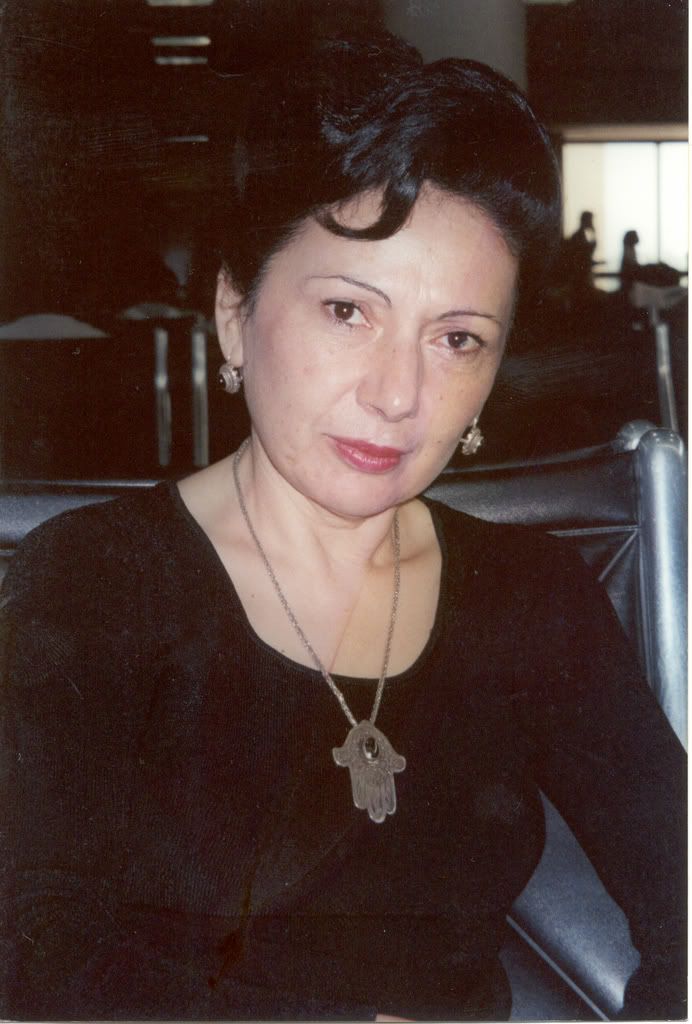
Dr. Ludmila Grigorian, a physician and civic activist from Stepanakert, was the only female participant. She shared her impressions with Hrachya Arzumanian on July 5, 2007 in Stepanakert.

HA: How did you first become involved in civic activism and human rights issues?

LG: I was born in a family of veteran Communist Party members and our home was always full of conversations about Karabakh, its fate, its future. So for me civic activism was very natural and somewhat of a norm. My husband and I were living in Leninakan [Ed. – now Gyumri] when the Karabakh Movement began in early 1988, and we moved to Stepanakert to be in the middle of it all.

I was certainly not a public persona or a politician back then and my participation in this Movement was more a realization of my spiritual drive and principles. Our home was near Stepanakert’s main square, which became the focal point of non-stop demonstrations and strikes. Initially, I saw my role as assisting those taking part in the demonstrations, and I thought that politicians should be left to deal with serious issues. But step by step, I began to be drawn into the Movement, becoming an active participant in various meetings and public addresses.

Then the war came along with its brutality. The loss of my husband, my own serious injury and subsequent treatment in various cities and lengthy rehabilitation - the story of my family is typical for Karabakh families that bore the brunt of the war. Following the rehabilitation, I returned to Karabakh to head a [frontline] field hospital for the Army’s assault regiment, then to become the Army’s chief therapist. Currently, I am chief of therapy in the NKR Health Ministry.

HA: Why do you think you were invited to take part in this initiative?

LG: Perhaps it was my independent image – I never parroted anyone. I can collect myself in difficult moments and be absurdly brave at times. My experience in the independence movement from its very first days and my war record - all these factors taken together probably led to the [NKR] leadership deciding to suggest me for participation in this initiative.

I do believe that I am one of those people who have the moral right to speak in the name of those who saw that war, those who fought in it and lost their loved ones in it. I think I do have the right to really say what war is while sincerely wishing for peace.

And I did have previous contacts with Azerbaijani intelligentsia through the Helsinki-92 Initiative - starting in 1993 I participated in meetings held in the United States, Stepanakert and Vanadzor, so personally I was ready for such contacts.

HA: How was the June 28 meeting arranged?

LG: Just a week earlier I got a telephone call. They told me that, possibly, such a meeting could take placed and asked if I could take part in it. I agreed, even though I have to tell you that to the end I doubted that the mission would go through.

We met in Stepanakert. The meeting’s tone was set by Ambassadors Polad Bul-bul-ogly and Armen Smbatian. It turned out that several participants have known each other for some time, so it helped set an atmosphere of good will right from the start.

After a quick breakfast, we went to meet with NKR President Arkady Ghoukasian. I want to give credit to our President for his diplomatic tact. Azerbaijani participants spoke first noting that the current format of the official peace negotiations does not provide for developing contacts between the societies and that the initiative was intended to fill that gap.

President Ghoukasian welcomed the initiative. He said that compromises are inevitable as part of any settlement, but compromises could not be made to an enemy. For compromises to become possible there must be more communication, good will and trust between the sides. But so far Azerbaijan and its various representatives have flatly refused talking with Nagorno Karabakh. In conclusion, Pres. Ghoukasian pledged his support for such initiatives in the future.

I think these points were well taken by the Azerbaijani delegation.

Following the meeting there was a trip to Shushi, where Polad [Amb. Bul-bul-ogly] visited a mosque and his father’s home. At the mosques we, including the Azerbaijani delegation, saw preparatory works underway for its restoration. Moreover, Polad suggested that should our initiative be approved, he would request that Azerbaijani masters be allowed to take part in restoration works.

Then we walked down to the home of the Ambassador’s late father [prominent folk singer Murtuz Mamedov known as “Bul-bul”] – the old one, where his father was born, and the newer one now occupied by a family displaced from Getashen [under Azerbaijani control since 1991]. Polad talked to the woman living there and as he was leaving shook her hand and said: “Please, continue to live here. When someone lives in a house, it stands. It would have been worse, if no one lived here.”

After leaving Shushi we went to the heliport and flew to Yerevan for a meeting with President Robert Kocharian, who welcomed us and talked about the need for such contacts, and that such efforts were long overdue. Then the heads of the Azerbaijani and our delegation once again outlined the initiative.

Pres. Kocharian then suggested that I, as the only representative from Karabakh, should say a few words as well. Without violating the mission’s format he in a way let everyone know that no matter the level of the cultural dialogue between Armenia and Azerbaijan, the Karabakh issue cannot be discussed without Karabakh itself. After that meeting concluded on a friendly note, we were taken to the Sergei Parajanov museum which impressed everyone.

Then back to our bus and the plane. We landed in Baku, where we were met by representatives of their Ministries of Foreign Affairs and National Security. The atmosphere was rather calm, even friendly. Baku has changed significantly in recent years, with a lot of construction taking place. Some of the Armenian delegation members remembered the old Baku and that was well received by the Azerbaijani participants.

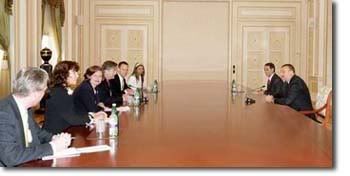
We went into the presidential palace, with its Middle Eastern extravagance, and were ushered into President Ilham Aliyev’s reception hall. We waited for 15 to 20 minutes. The protocol demanded that every one of us stood behind the chair on which we were to sit down. And so we waited standing up until Pres. Aliyev arrived.

When he did, he greeted everyone rather coldly. I think all participants noted the striking difference between the good will of the Armenian Presidents and the cold, even tense reception of the Azerbaijani one.

The meeting began with Polad briefly explaining the point of the initiative. Then it was Pres. Aliyev’s turn. Without changing his facial expressions he began to repeat all the formulas that he frequently uses at official meetings. About the seven occupied districts and hundreds of thousands of refugees.

As I was listening, it became clear to me that a continuation of our mission would be quite problematic. I am the type of person who tries to identify a constructive element in any situation, in this case was just flabbergasted. I did not want to speak up aggressively, but did not wanted to pretend either. All I wanted to do at that moment is just to leave quietly.

And it was just then that Polad said: “Mr. President, I wanted a participant from Karabakh to say a few words – Ludmila Grigorian is a doctor, a representative of the humanitarian profession.”

So, at that point there was no going back.

“Mr. President,” I began, “if it was not for your words and your tone, which differed so much from what we heard from the two of our Presidents earlier, I would just limit myself to a simple greeting. But you decided to go beyond the framework of the mission, and I am forced to say that I am a widow who raised three orphans, that I was wounded, and I don’t want to continue that list because it would only distance us from the goals we identified. There is so much pessimism in your voice that it leaves me without a hope for the future – and I am not even talking about resolving our issues, I am talking about having a dialogue between our nations.”

Pres. Aliyev appeared to become agitated, but I went on:

“You are talking about hundreds of thousands of refugees, who live in inhuman conditions. I am sorry – but did this rich country, which we just saw, found no funds or a decent place to settle your own compatriots? You are keeping them in reservations, because you cannot afford to provide them with decent living? I am sorry – but years ago not a fewer number of refugees were settled in the Armenian states, and today they are full-fledged citizens. Or perhaps you are keeping refugees in tent cities to use them as a catalyst for anti-Armenian sentiments, to stoke hatred and calls for war?

“We are not overestimating the importance of today’s meetings. And I am certainly far from thinking that we can resolve the Karabakh problem in half an hour. All we wanted is to receive your approval for our contacts in the spheres of science and culture. Our presidents supported us, but your pessimistic tone has put an end to the atmosphere of good will that we enjoyed from nine o’clock this morning until now.”

There was silence in the room for a while, with everyone unwilling to break the pause. Then Pres. Aliyev said: “Yes, your presidents can afford to be welcoming and friendly because they are talking from the position of victors and not the vanquished.”

And at that moment, I have to say I did feel like a victor. I thought to myself: With all the riches his country has, can Pres. Aliyev suffer from the complexes so much that he could not afford us even diplomatic tact and tone?

After several general phrases the meeting was over.

After that we visited the Armenian Church building in Baku. On the outside it is pretty much the same, but inside there is now a state library. They say the government decided to put the library there to prevent it from being destroyed by local nationalists. “We could not save it in any other way,” said Polad.

Then there was dinner and informal conversations, during which Polad tried to broach ways that would bring Karabakh under Azerbaijani sovereignty.

“You know,” he said, “Azerbaijani oil is really black gold. And I noticed that life is difficult for you [in Karabakh]…” Then he would try to present an optimistic scenario of how the Azerbaijani oil could make Karabakh flourish.

Well, I told the Ambassador, in the early days of the Karabakh Movement in 1988 [after the anti-Armenian violence vegan in Azerbaijan], we decided to cut off all links with Azerbaijan. The Soviet Union was still around, but Karabakh was blockaded, there was a real threat of hunger.

On occasion, Azerbaijan would dispatch food supplies by rail or on trucks to curry favor with us, but we would refuse it. [At the time Stepanakert was controlled by Soviet internal security forces.] There would be trucks with candy, pastries, coffee unguarded in Stepanakert’s main square. But not even our hungry kids would come up to these trucks to take the candy.

You could call it insanity, perhaps it was. But that was Artsakh’s determination in those difficult years. Azerbaijan could not buy us when we were hungry, when we were facing war and had no weapons to defend ourselves.

Today, we can fend for ourselves, we are supported by the Armenian Diaspora and we are not hungry. So, I told Polad, don’t try to bribe us today - this demeans both you and us. Let us try to build our ties on a different basis.

HA: Did the Azerbaijani Ambassador understand your last message?

LG: I think so. During that entire day, he openly expressed his interest in me and by extension in Karabakh. He was trying to understand, how we live, what we think about, what we are striving to achieve.

HA: Will the initiative be continued?

LG: I would not rule it out. I told Pres. Aliyev that while politicians are looking for a political solution, our two nations are drifting further apart from each other, and when a mutually agreed solution is found there will be an issue of whether societies are ready to accept it. What prevents us from preparing our societies today, so that they could help prod politicians towards a solution?

Another possibility is that the contacts will go back to the level of non-government organizations. This seems to be likely, considering the information campaign now underway in the Azerbaijani media [against the Ambassadors’ initiative]. From the Armenian side there are no artificial obstacles and we are ready to discuss all the issues raised. But is the Azerbaijani society ready? Those whom I know and with whom we have been in touch during the latest mission are probably ready. There is educated youth that should meet and debate.

The issue is who will prevail in the Azerbaijani society – the initiative’s participants and others like them or those who are now organizing the campaign against them in the media. So far, the general atmosphere in Azerbaijan remains tense and intolerant. Such is the Azerbaijani society, its political elite and it is a major problem for all of us.

To sum up: today, we are facing a paradox, when a hand first extended from the Azerbaijani side is also being pulled back from the same side. We are left to wait until the Azerbaijani society is ready for normal contacts and relations, which would without doubt benefit the entire South Caucasus.

P.S. During July 9 State Department press conference held jointly by Deputy Assistant Secretary Matt Bryza and Azerbaijani Deputy Foreign Minister Araz Azimov, the Armenian Reporter asked if there was an effort to build on the June 28 meetings. Mr. Bryza called the visit “a significant development… a major, serious, confidence-building measure,” yet “not a breakthrough.”

Mr. Azimov said he did not anticipate an immediate follow-up. “The [June 28] visit has not been charged by a concrete task, because it was, again, an initiative of two ambassadors of Azerbaijan and Armenia to Russia.” He described it more as an exercise to collect “more objective information” rather than a confidence-building effort the two Ambassadors talked about.

- Hrachya Arzumanian, PhD, is a Stepanakert-based contributor to the Armenian Reporter. Washington editor Emil Sanamyan contributed to this story.

Hrant Dink murder trial gets underway

Originally published in July 7, 2007 Armenian Reporter.

Hrant Dink’s family urges thorough investigation as murder trial gets underway in Istanbul
By Emil Sanamyan


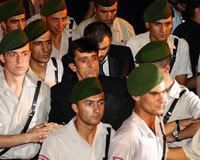
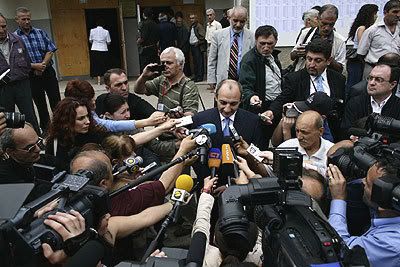
WASHINGTON - Trial of 18 individuals allegedly involved in the murder of Turkish-Armenian writer Hrant Dink began in Istanbul on July 2 in a tense atmosphere, international media and Reporters Without Borders (RWB) reported.

Lawyers for one of the defendants attacked Dink’s wife Rakel and daughter Delal as “traitors,” as they arrived in court. “You are holders of Armenian passports,” one of them reportedly shouted.

The same lawyers later argued that Dink was found to be a “traitor” by the judicial system, when he was found guilty of “insulting Turkishness” in his articles and interviews that mentioned the Armenian Genocide. (Hrant Dink’s son Arat and several colleagues are currently facing similar charges for recently republishing one of the late Dink’s interviews.)

Meantime, more than 2,000 people gathered around the courthouse with placards and photos of Dink and chanting "We are all Hrant Dink, we are all Armenians."
Dink’s family’s lawyer Fethiye Cetin urged a thorough investigation that would probe official involvement and charged investigators with ignoring evidence of a wider conspiracy.

Britain’s Independent in its July 4 story cited Rakel Dink’s appeal to the judge: "You are not of this darkness, please be brave enough to investigate fully so that the end of the trial will mark a new enlightenment for Turkey. I forgive those people, but I want the state to clear this case fully for the future generations."
The accused include Ogun Samast who confessed to shooting Dink in the back on January 19 and Yasin Hayal who claimed earlier that he organized the murder on behest of Turkish security officials. (For details see February 24, 2007 issue of the Reporter.)

But as the RWB reported on July 4, the General Directorate for Security which oversees Turkish police sent a report to the court claiming that Hayal, Samast and others acted on their own initiative without official backing or involvement.

There have been credible reports of such involvement. According to Dink’s family and friends, he was threatened by Turkish officials shortly before the murder. A video leaked to the press showed Turkish security officials congratulating Samast after his arrest.

Turkish media then cited Samast’s co-conspirators’ claims that they were either encouraged by security officials to commit the murder or repeatedly informed them about the plan with no official efforts to protect Dink. Even senior Turkish officials, including Prime Minister Recep Tayyib Erdogan, publicly speculated that elements in Turkey’s security establishment may have been involved in the murder.

For now four of the 18 defendants were released at the end of the first hearing, which lasted more than twelve hours. Because Samast was under 18 at the time of the crime, he is facing between 26 and 42 years in prison, Hayal and another defendant, a former police informant Erhan Tuncel face charges that may end in life imprisonment.

The next hearing is planned for October 1.

In Brief: RFERL in Armenia; U.S. aid to Armenia; Russia seeks U.S. ties

Originally published in the Armenian Reporter on July 7, 2007

From Washington, In Brief
By Emil Sanamyan


State Department criticizes proposed curbs on U.S.-funded radio in Armenia

“We would be deeply concerned about any legislation that would restrict the abilities of Radio Liberty to broadcast in Armenia,” the U.S. State Department said in response to a media query on July 2, a day before the Armenian government initiative banning foreign broadcasters from the national Public Radio failed to pass Armenia’s National Assembly.

The Armenian service of the U.S.-funded Radio Liberty, which is frequently critical of the Armenian government, currently has that government’s permission to broadcast through the Public Radio (www.armradio.am). The Armenian government’s proposal would have likely stripped it of that right and also impose steep penalties on private TV and radio stations that carry foreign-funded broadcasters.

“We fail to see how any such proposed legislation would further the Armenian Government’s stated desire for continued democratization, particularly in the wake of the May parliamentary elections that marked a step forward even as they reflected the need for further improvements toward democratic standards,” said the spokesman’s statement.

Following the parliament’s failure to pass the legislation on July 3, the U.S. Embassy in Armenia spokesman Tom Mittnacht said his government was “happy that Radio Liberty will be able to continue broadcasting” and added that there should be more opportunity to discuss the proposal before the Parliament may take up the issue again. "We appreciate the substantive and active dialogue we have had with the speaker of the assembly,” said Mr. Mittnacht.

Senate bill proposes $39 million in 2008 Armenia aid The Senate Appropriations Committee approved its version of the Fiscal Year 2008 foreign aid bill on June 28, setting aside $39 million in assistance to Armenia, according to sources familiar with the committee’s report language. There were specific allocations for military assistance to Armenia or aid to Nagorno Karabakh.

Following anticipated passage by the full Senate, the bill will next need to be reconciled with the House of Representatives’ version, which proposed $68 million in assistance to Armenia, $6 million to Karabakh, and additional $3.3 million in military aid to Armenia (and the same amount to Azerbaijan, see this page in the June 9 Reporter). Typically, final figures are a compromise between the House and Senate versions.

On March 29, Armenian-American groups urged Congress to provide “not less than” $75 million in economic aid to Armenia, $10 million to Karabakh and maintain parity in security assistance to Armenia and Azerbaijan.

The lower Senate allocation for Armenia came despite the overall increase in assistance to the former Soviet Union (FSU) from $350 to $401 million, as reported by the Senate Committee press office on June 28. The committee also lowered the allocation for the Millennium Challenge Corporation (MCC) to $1.2 billion, citing $2.1 billion in unobligated funds. Armenia is set to receive $235 million over five years in development aid through the MCC.

The Senate proposal also offered for a broader half a billion dollar cut in the U.S. bilateral economic assistance worldwide from $17.8 billion requested by the Bush Administration and a similar increase in development assistance to total $1.5 billion. Israel remains the largest U.S. foreign aid recipient, with the House of Representatives approving $2.4 billion in mostly security assistance.
President Bush may yet veto the entire bill if it retains funding for contraception and overseas clinics that provide abortions.

Key House sponsors welcome growing support for Genocide resolution

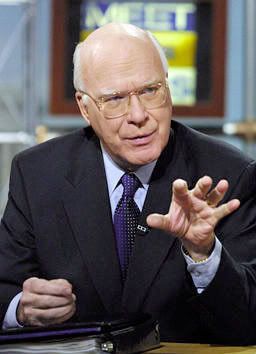
With 219 of 435 members of the House of Representatives now supporting the Armenian Genocide resolution (H. Res. 109), its key sponsors urged its prompt passage.

Rep. George Radanovich (R-CA) called the current level of support “a tremendous milestone [that] demonstrates unequivocal support to recognize the Armenian genocide." In a comment sent to the Reporter by his staff on June 29, he added that "Speaker [Nancy] Pelosi has been supportive of our efforts in the past, and the responsibility rests on her shoulders to bring this resolution up for a vote on the House floor. For her to not bring this up for a vote, now that there are enough cosponsors to guarantee passage, raises questions of her commitment to the issue."

Meantime, Co-chair of the Armenian Congressional Caucasus Rep. Frank Pallone, Jr. (D-N.J.) told the U.S-Armenia Public Affairs Committee that he is “very proud that this overwhelming number of U.S. Representatives now understands that our nation cannot effectively work to end current crimes against humanity without recognizing those that have previously occurred."

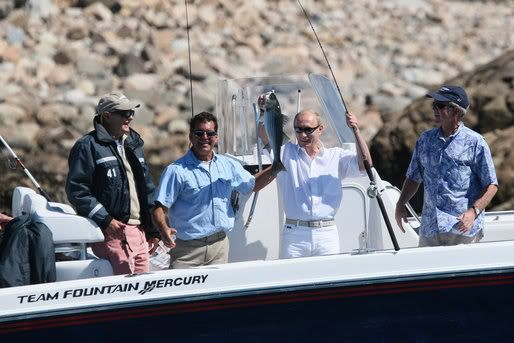
Russia seeks strategic ties with U.S. The Bush family hosted Russia’s President Vladimir Putin at their home in Kennebunkport, Maine on July 1-2, with the two presidents focusing on Iran and strategic missile defense, and finalizing a new nuclear energy agreement.
The visit was arranged amid vocal bilateral disagreements on the range of issues - from status of Kosovo to energy security to U.S. plans to install radars and missile interceptors in central Europe.

At their joint press conference on July 2, President George W. Bush noted that his Russian counterpart proposed a “regional approach to missile defense.” Pres. Bush said he was in “strong agreement with that concept” and that work on it should continue.

Several weeks ago, Pres. Putin offered U.S. joint use of Russia’s early warning radar near Gabala, Azerbaijan instead of building new radars in Europe, a proposal Mr. Bush termed “interesting,” but several experts argued was not technically feasible. (See this column in the June 16, 2007 Reporter).

This week Mr. Putin expanded on that proposal. “We are prepared to involve in this work, not only the Gabala radar,” he said, but also “the newly built radar, early warning system in the south of Russia,” which is currently under construction and is expected to replace one at Gabala by 2012.

Mr. Putin said that cooperation on missile defense would raise the relations “to an entirely new level” and “lead to a gradual development of strategic partnership in the area of security.” But U.S. sees Russian facilities as potentially complementing and not replacing those in central Europe.

Mr. Bush also said that he was “counting on the Russians’ support to send a clear message to the Iranians” through new, tougher United Nations sanctions. But the two presidents did not appear to agree on the exact nature of the sanctions.

But the former U.S. Ambassador to Russia James Collins told RFE/RL on July 3 that the summit marked another key development in bilateral relations – the signing of a key cooperation agreement on civilian nuclear energy. “To have this agreement means that we now have open the opportunity for our whole civilian nuclear communities in both countries to work together,” said Amb. Collins. “And that has not been the case up till now.”

The Russian President’s stopover at Kennebunkport was on his way to the International Olympic Committee meeting in Guatemala, which on July 4 selected Russia’s Sochi over Korean and Austrian alternatives as the location for the 2014 Winter Olympics.

An Armenian appointed British Minister of Health

The Great Britain’s new cabinet will have an ethnic Armenian as Health Minister. Sir Ara Darzi, a prominent surgeon, was on June 27 appointed to the cabinet of Prime Minister Gordon Brown who took over from Tony Blair last week.

Prior to the appointment, the 47-year-old Dr. Darzi was chair of surgery at Imperial College London and National Advisor on surgery. Dr. Darzi was born in Baghdad and raised in Dublin, where his father Vartkes Darzi (Terzian) moved after receiving an engineering degree in California.

The Guardian newspaper op-ed on July 5 described the new minister as “one of the world's leading surgeons, a charismatic Renaissance man who operates at 6am, pioneers robotic non-invasive technology, and still finds time to be a formidable committee man.”

In a 2003 interview with David Zenian, then with AGBU News, the elder Mr. Darzi, himself a son of Genocide survivors, took pride in his son “as first Armenian to become an honorary Knight Commander of the Most Excellent Order of the British Empire (KBE).”

Dr. Darzi himself said at the time that he would “really like to take my knowledge to Armenia… I have not had the chance until now, but I hope to get more involved in the coming years. I want to go to my roots. I have served in many countries around the world. Why not also Armenia?” he said.

OSCE to monitor Turkish elections, sort of

The Organization for Security and Cooperation in Europe (OSCE) will dispatch a monitoring mission to “assess” Turkey’s general elections this July 22, it said in a statement on June 25. “The mission, led by Julian Peel Yates from the United Kingdom, includes experts from 14 OSCE countries.”

But the team, the release said, “does not intend to carry out systematic or comprehensive observation of the voting, counting, or tabulation.” The OSCE will issue a report of findings two months after the completion of the election process.